


SIGA
| August 14, 2025
What is a Good ROI for Rental Property in Australia with Average Returns and Benchmarks?
Table of Contents
Understanding Good ROI for Rental Property
A good ROI for rental property in Australia typically ranges from 3% to 7%, with significant variations depending on location, property type, and prevailing market conditions.
Investors need to know rental yield benchmarks to make informed decisions on purchase price, monthly rent and ongoing expenses.
Australian capital cities are different in 2025. Regional areas outperform capital cities for gross yield while capitals have stronger growth.

What is a Good ROI for Rental Property?

Industry Benchmarks
Australia’s national average rental yield is 3.56% (5 year average), current gross yield is 5.04% in Q1 2025.
But performance varies greatly by location and property type. These cap rate benchmarks help real estate professionals value the market and potential returns.
| ROI Range | Performance Level | Typical Scenario |
| Below 3% | Poor | High-value cities, overpriced properties |
| 3% – 5% | Good | Major capitals, balanced markets |
| 5% – 7% | Great | Growing locations, strong demand |
| 7%+ | Exceptional | Mining towns, high-risk areas |
Poor ROI (Below 3%)
- High purchase price relative to rental income
- Limited rental growth potential in expensive markets
- Sydney averages 2.98% for houses, need to analyse net operating income
Good ROI (3-5%)
- Balanced cash flow and moderate appreciation
- Brisbane 4.02% average net rental yield
- Capital cities with stable demand and manageable property management fees
Great ROI (5-7%)
- Strong rental demand in emerging markets
- Darwin 6.6% overall, 7.8% for units
- Growing locations in regional areas 8.3% for units
Exceptional ROI (7%+)
- High-risk or undervalued markets with strong cash on cash return
- Mining towns like Roxby Downs 9.9% gross rental yield
- Market volatility and market fluctuations
Check out Global Property Guide’s Australian market report for current national rental yield data and quarterly performance metrics.
ROI Benchmarks for Rental Property by Location
Major Cities vs Secondary Markets
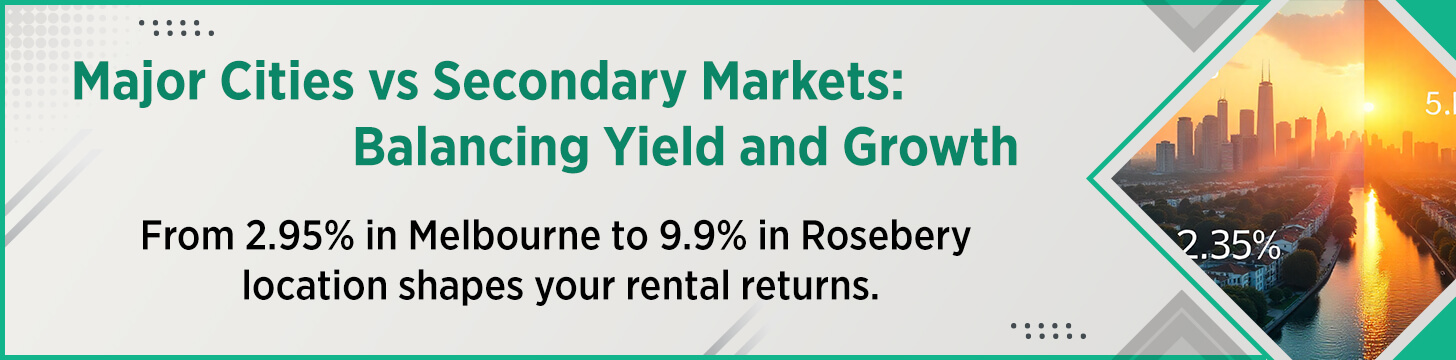
Major eastern cities have lower rental yield but stronger capital growth, smaller capitals and growing locations have higher rental returns.
Real estate agents recommend considering both immediate cash flow and long term capital appreciation.
Sydney 2.98% for houses, Melbourne 2.95%, Darwin 6.27% for houses, Perth 4.4%. These are different market dynamics and local real estate investment conditions.
For suburb by suburb analysis and state comparisons, OpenAgent’s research reveals Australia’s top performing rental markets.
Geographic Patterns in Real Estate Investment
Regional Western Australia dominates high-yield areas, 12 of the top 20 suburbs by gross rental yield are in rural WA, around mining centres like Pilbara and Coolgardie.
Understanding location and accessibility is key to finding the right rental property investment.
Tasmania’s Rosebery 9.9% net rental yield for houses, South Australia’s Port Pirie West 9.2% returns. These regional areas have better cash on cash return for investors looking for immediate rental income.
Check out Savings.com.au for regional performance leaders research.
ROI by Property Type and Investment Strategies
Units always outperform houses for rental yield in the same location. For example, Darwin units 7.8% vs houses 6.0%, houses have better long term capital growth.
Investors should consider both gross rental yield and net rental yield when comparing investment properties.
Real estate agents say while apartments have higher rental yield, detached houses have better long term capital growth. Strata fees and maintenance fees can eat into net returns on unit investments.
For international investors looking for Australian market information, Wise has rental returns and regional performance data.
Why Good ROI Varies by Market Conditions and Investment Goals

Market Dynamics That Affect ROI
Interest rates have a big impact on investor activity, with the RBA’s 4.35% cash rate affecting borrowing capacity and property demand for 2024. Monthly mortgage payment calculations and mortgage loan terms directly affect cash flow projections.
The national vacancy rate is at 1.9% with some cities like Adelaide at 1.1% occupancy rate, creating rental pressure that supports rental yield growth. These tight market conditions improve rental income potential across many Australian capital cities.
Rental growth has eased to 3.4% p.a. down from 7.8% p.a. in 2023-24, so property investors should factor these trends into their investment strategy and financial reports.
Your Investment Goals Matter
Cash Flow vs Capital Appreciation Focus
- Income focused investors: Target 5%+ rental yield for immediate cash flow and negative gearing benefits
- Growth focused investors: Accept 3-4% rental yield for 5-7% p.a. capital growth
- Balanced approach: 4-5% rental yield with moderate growth
Risk Tolerance Levels and Real Estate Investment Approaches
- Conservative investors: Major cities, 3-5% rental yield, stable markets
- Moderate risk: Growing locations, 5-7% rental yield, emerging areas
- High risk: Mining towns, 7%+ rental yield, volatile commodity cycles
Star Investment can help with investment strategy frameworks including positive gearing and cash flow optimisation.
Property Specific Factors That Affect Returns
Property age, condition, tenant relationships and property management efficiency all impact actual returns.
Net rental yield is usually 1.5-2% lower than gross rental yield after accounting for operating expenses like property management, insurance, maintenance costs and property taxes.
Additional costs include strata fees for units, building inspection fees during purchase and ongoing agent fees. Using property management software can help track these expenses and cash flow management.
NAB has a great article on negative vs positive gearing with examples and calculations.
How to Evaluate If Your ROI is Good
Basic ROI Calculation and Cap Rate Analysis
Return on Investment Formula: (Annual Net Operating Income ÷ Total Investment) × 100
Example: $600,000 investment property generating $31,200 p.a. rent = 5.2% gross rental yield
For net rental yield, subtract annual operating expenses (usually 20-30% of rental income) including property management fees, maintenance fees and property taxes to get your true cash on cash return.
Use the 1% rule (monthly rent should be 1% of purchase price) and 2% rule (monthly rent should be 2% of purchase price) as quick filters. The 50% rule is that operating expenses will eat up about 50% of rental income.
Applying Benchmarks to Your Real Estate Investment ROI
Compare your property’s performance against local market averages using financial reports and property market research. A 4-6% rental yield is generally good in Australia, but this varies greatly by location and property type.
Consider both current rental yield and capital growth potential. A combined total return (rental yield + capital growth) of 10% or higher is strong.
Factor in capital gains tax implications and income tax benefits from negative gearing when calculating net annual profit.
For full ROI calculation methods and assessment techniques, Scotpac has detailed step-by-step guides on investment evaluation.
Strategies to Improve ROI on Rental Property Investments
Increase Rental Income Strategically
- Research comparable properties and do regular market reviews
- Target high demand niches like student housing or commercial rentals
- Consider vacation properties in tourist areas for higher average daily rate
Reduce Operating Expenses and Improve Cash Flow
- Efficient property management companies can reduce management fees
- Bulk insurance purchases and preventive maintenance lower costs
- Use property management software like Landlord Studio to streamline operations and improve tenant relationships
Value-Add Improvements for Better Returns
- Strategic renovations like bathroom upgrades or air conditioning can justify higher monthly rent
- Consider maintenance and upgrades that improve occupancy rate
- Factor renovation costs into your overall return on investment calculations
Financial Optimization Strategies
- Refinance Opportunities: Lower interest rates through refinancing can improve cash flow and free up capital for additional rental property investments
- Tax Planning: Understand negative gearing benefits and capital gains tax implications
- Portfolio Diversification: Consider real estate investment trusts, industrial properties or office space investments
For 2025 market forecasts and growth strategies, Property Update has the inside information.
Rental Property Investment Statistics & Market Trends 2025
National Forecasts and Market Value Projections
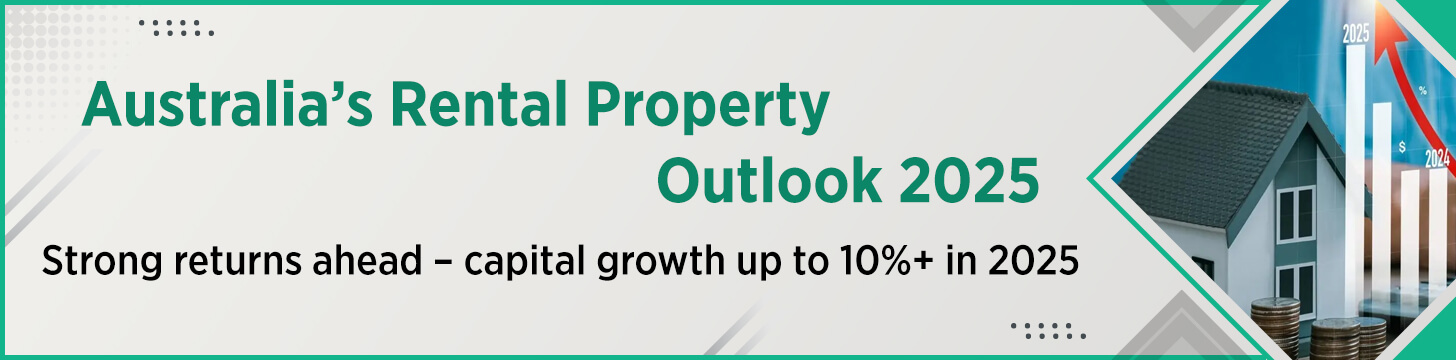
- House prices: 3.3% growth
- Unit prices: 4.6% growth
- Rental growth: 3.5-4.5% p.a. (moderating from peaks)
- Combined total returns: 10%+ is strong
Regional Performance Leaders in Real Estate Investment
- Adelaide: 7-9% growth, strong fundamentals
- Brisbane: 5-7% growth for houses, Olympics infrastructure boost
- Perth: Rolling momentum after 50% growth over 3 years
- Darwin: Highest gross rental yield in the country
What’s Impacting Property Investors
- Affordable markets outperforming expensive segments
- Regional migration from major Australian capital cities
- Investor activity increasing with expected rate cuts affecting mortgage payments
- Unit prices to outpace houses due to affordability constraints
For official rental market data and inflation trends, check out the Australian Bureau of Statistics.
Conclusion: Get the Best Out of Your Rental Property
Good rental property ROI varies greatly across Australia’s different real estate markets. Your individual circumstances and investment strategy determines what is strong performance.
Use realistic benchmarks for location and property type. Aim for 5%+ gross rental yield for income focused or 3-4% for capital growth.
Make data driven investment decisions with property market research, professional valuations and analysis. Success is matching your investment strategy to the market and your goals.

Valuable Insights On Property Development & Investment Opportunities
-

Top High Interest Short Term Investment Options for 2026
High Interest Savings Accounts for Liquid Cash Buffers Cash sleeve purpose and liquidity role High…
Read More -
Best Performing Managed Funds in Australia: Expert Tips & Strategies
Top-Performing Managed Funds in Australia: What Investors Need to Know In 2026, Australian investors are…
Read More -
Best Financial Advisor Perth: How to Choose the Right Expert for Your Goals
Financial Advisor Perth Key Criteria for Choosing the Best Adviser Choosing the best financial advisor…
Read More -
How to Make Money from Property Development in Australia: A Comprehensive Guide
High-Growth Cities Offering the Best Property Development Margins Australia’s property development landscape will be shaped…
Read More -
What Are the Best Low-Risk Investments in Australia for Beginners?
Low-Risk Investing in 2026: The Beginner Snapshot For Aussie beginners seeking low-risk investments in 2026,…
Read More


Our Project Site :


Exclusive waterfront living at the Lake Narracan Resort community.

Quick Links
The information provided is general in nature and does not constitute personal financial advice. The information has been prepared without taking into account your personal objectives, financial situation or needs. Before acting on any information on this website you should consider the appropriateness of the information having regard to your own objectives, financial situation and needs. All statements made on this website are made in good faith and we believe them to be accurate and reliable however do not guarantee its currency. You should seek legal or other professional advice before acting or relying on any of the content.
Please note that past performance may not be indicative of future results. Different types of investments involve varying degrees of risk, and there can be no assurance that the future performance of any specific investment, investment strategy, or product made reference to directly or indirectly on our website, blogs , newsletters.
Our Project Site :

Find premium land developments and new estates across Australia.
Exclusive waterfront living at the Lake Narracan Resort community.

Quick Links
The information provided on this website including blogs is general in nature and does not constitute personal financial advice. The information has been prepared without taking into account your personal objectives, financial situation or needs. Before acting on any information on this website you should consider the appropriateness of the information having regard to your own objectives, financial situation and needs. All statements made on this website are made in good faith and we believe them to be accurate and reliable however do not guarantee its currency. You should seek legal or other professional advice before acting or relying on any of the content.