


Table of Contents
Learning how to invest in Australia matters as this wealth looks to be deployed beyond real estate.
With interest rates, tech disruption and climate policy changing fast, where you invest next will determine your financial future.
The next decade will be shaped by technology, carbon neutral goals and deeper global financial integration.
Artificial intelligence will change how portfolios are built and managed. Sustainable assets and global capital flows will impact returns in Australia.
You’ll discover 7 Smart Strategies for 2025:
- Shares & ETFs for digital growth
- Next-gen property & real estate
- Managed funds & super integration
- Startups & alternative assets
- Tax & government incentives
- Diversification for resilience
- Risk & AI-driven portfolio management

The Foundations of Investing in Australia (2025 and Beyond)
Risk vs Return in the Next Decade
Investing always involves balancing risk and reward — and that balance will shift significantly over 2025–2035.
In 2024, Australia’s International Investment Position showed foreign investment inflows of A$ 326.9 billion, taking total inward investment to A$ 4,970.6 billion. This is appetite and exposure.
High growth investments (tech, ESG, startups) can deliver returns above 8–10% p.a. But they come with volatility, regulatory risk and sector disruption.
Safer assets—government bonds, high grade corporate debt, cash equivalents—offer stability but low returns (often 3–5%).
Over the next decade, inflation, climate change and geopolitical shifts will increase volatility. Investors must choose strategies that can tolerate drawdowns while capturing upside.
Core Principles for New Investors
- Start early & stay consistent
- Compound returns over a decade matter more than timing the market.
- Never bet all on one theme
- Even in “hot” sectors, diversifying helps against disruption.
- Focus on long term themes
- Technology, sustainability, clean energy and demographic shifts will drive returns to 2030.
- Cost control is key
- Low fees in funds, ETFs or robo platforms will boost net returns.
- Stay educated and adapt
- New tools (AI advisors, tokenised assets) will come. Be prepared to adapt.
In Australia, many new investors are heavy on property and super. But overexposure to one asset class risks unknown regulatory changes or sector cycles.
Government Policies & Regulations
The Australian government sets the rules. In March 2025, the Foreign Investment Policy 2025 tightened review across key sectors: energy, telecoms, technology, infrastructure.
Proposals involving sensitive tech or dual use systems will face stricter national and security scrutiny.
The Treasurer’s national interest test now considers ownership structure, control risk, tax arrangements and national security reputation.
Also, domestic regulation is increasing:
- ASIC is cracking down on fund management, market misconduct and disclosure compliance.
- The government is pushing ESG and green bond issuance: e.g. first federally certified green bonds launched in 2025 to support climate goals.
- Clean Energy Finance Corporation (CEFC) now manages over A$32 billion in green investments, investing in renewables and sustainable infrastructure.
These frameworks both limit and enable investment. On one hand, stricter rules deter opportunistic speculation. On the other, policy incentives (grants, tax offsets, green mandates) can unlock new sectors.
7 Ways to Build Wealth
Invest in Shares and ETFs for Digital Growth

Shares and ETFs are the easiest way for Australians to build wealth. In 2025–2035, the key drivers will be technology, sustainability and innovation.
Investors who get in early will get stronger returns, wider diversification and exposure to Australia’s changing economy.
AI Trading Platforms
AI is changing how Australians buy and sell shares:
- Trading platforms powered by AI now manage over a fifth of retail market orders in Australia.
- Apps like Raiz Invest and Spaceship use algorithms to round up spare change and automatically invest it into diversified ETFs.
- By 2030 hybrid human-AI models will dominate, with AI making the trades and humans providing oversight.
- These systems eliminate emotional decision making, helping investors stay disciplined through market volatility.
AI also gives smaller investors access to tools once reserved for institutional traders, including predictive analytics and automated risk management.
Green ETFs and Sustainable Investing
Sustainability is becoming a major force in Australian investment markets:
- FAIR ETF (BetaShares Australian Sustainability Leaders ETF) has returned ~16% per annum over the last 5 years.
- The Clean Energy Finance Corporation (CEFC) committed A$4.7 billion in new capital to renewable projects in 2025, double the prior year’s allocation.
- ESG ETFs will make up a quarter of the Australian ETF market by 2030, as younger and climate conscious investors demand more.
- Green ETFs also reduce regulatory risk as governments tighten emissions and sustainability requirements.
By aligning your portfolio with the transition economy you can get strong growth and avoid stranded assets.
ASX Opportunities
The ASX is a hotbed for innovation driven growth:
- Renewable infrastructure companies like PowAR are scaling fast.
- Australian biotech and fintech companies are attracting global capital, positioning themselves as future leaders.
- Financial services companies embedding digital platforms into their business are gaining long term investor interest.
- Many ASX listed companies are committing to net-zero 2030 goals which align with global sustainability flows.
AI platforms, ESG ETFs and ASX innovators are changing equity investing in Australia. Smart investors will combine all three to get the best returns.
Wealth Through Property & Real Estate

Property has been the foundation of Australian wealth creation. Over 2025–2035 demographics, sustainability and infrastructure will change where and how value is created.
Smart investors need to look beyond traditional housing markets to get the next growth wave.
Regional vs Urban Growth (2030 Outlook)
Population patterns are changing, new property hotspots emerging:
- Regional hubs like Geelong, Ballarat, Toowoomba, and Newcastle are attracting buyers priced out of capital cities.
- ABS data shows regional property prices rose 5.3% in 2024, outpaced Sydney and Melbourne’s 3.2%.
- Infrastructure projects like fast rail in Victoria and new motorways in Queensland are driving regional demand.
- Urban growth is shifting to high-density smart precincts near transport and business districts.
By 2030 many regional centres will rival city suburbs for both capital growth and rental yield.
Smart Homes and Eco-Communities
Sustainability is driving property preferences:
- New developments are featuring net-zero housing with solar panels, battery storage and water recycling.
- Eco-communities with EV charging, green spaces and shared facilities are being built across NSW and Victoria.
- Properties with energy efficiency ratings (NatHERS 7+ stars) already command price premiums of up to 10%.
- Rising energy costs make eco-features financially attractive, not just environmentally.
By 2035 most new estates in Australia will have sustainable design as standard, boosting long term value.
REITs and Property via Super
You can invest in property without owning it:
- Real Estate Investment Trusts (REITs) provide liquid exposure to office, retail and industrial property.
- Superannuation funds already hold billions in commercial property and will expand allocations after stamp duty reporting reforms in 2025.
- Self-Managed Super Funds (SMSFs) can invest in residential and commercial property but tighter regulations require strict compliance.
- Listed REITs also benefit from rising demand for industrial assets like logistics hubs supporting e-commerce growth.
The property market’s future is in regional hotspots, eco-communities and REIT backed exposure. Investors who align with sustainability and infrastructure growth will get the best returns by 2030.
Diversify with Managed Funds & Superannuation
Diversification is the single most effective way to protect your wealth in uncertain times.
In Australia managed funds and superannuation are powerful tools that provide stability, global access and values driven investing.
Over the next decade reforms and ESG integration will make them even more essential.
Managed Funds for Stability
Managed funds pool your money and spread it across assets, reducing risk:
- They give you exposure to shares, bonds, property and global markets in one product.
- Professional managers handle asset allocation so you don’t have to.
- Funds like Future Super and Australian Ethical exclude fossil fuels and tobacco.
- In volatile years like 2022–2023 diversified funds outperformed single-asset portfolios by 3–5% per annum.
Managed funds are a safe starting point for investors building wealth over time.
Superannuation Reforms & Global Reach
Super is Australia’s retirement powerhouse, valued at over A$3.9 trillion in 2025.
- The Super Guarantee rate increases to 12% from July 2025 and will boost retirement savings.
- The government is consulting on retirement phase products and transparency.
- Major super funds are now investing in global infrastructure, private equity and offshore equities so members have international diversification.
- New rules propose a 30% tax on balances over $3m, so plan your wealth.
Super will still be the foundation of long term wealth but investors must adapt to the changing landscape.
ESG Funds for Ethical Investing
Ethical funds are growing faster than the market:
- Australian Ethical Investment manages $13.9b with strict ESG filters.
- ESG funds attract younger Australians—over 65% of Gen Z investors prioritise ethical alignment.
- These funds invest in clean energy, healthcare and social impact businesses.
- Many ESG funds have outperformed the market over the last decade.
By aligning with sustainability investors benefit financially and support long term societal goals.
Startups & Alternative Investments
High risk, high return assets will play a bigger role in Australian portfolios by 2035.
Startups, blockchain property and alternative industries like agri-tech and health-tech are opening up new paths to wealth.
These investments require courage and patience but deliver outsized returns when chosen wisely.
Tech, Fintech and Renewable Startups
Australia’s startup scene is booming:
- Fintech success stories like Afterpay proved Australian companies can scale globally, with Afterpay sold for $39b in 2021.
- In 2025, fintech investment reached $2.5b in Australia, led by digital payments, lending and wealth management apps.
- Renewable energy startups are attracting venture capital as Australia accelerates its net zero 2050 roadmap.
- AI powered startups are reshaping sectors from logistics to medical diagnostics.
These industries will deliver some of the country’s highest growth opportunities over the next decade.
Tokenisation & Blockchain Real Estate
Blockchain is changing how Australians invest in property and assets:
- Tokenization allows investors to buy fractions of real estate, lower entry costs.
- Platforms like Bricklet already allow Australians to buy property “fragments” from a few thousand dollars.
- Blockchain guarantees transparent ownership records and faster settlement.
- By 2030 tokenised assets will account for 10-15% of real estate investment globally.
This trend makes property markets more accessible to younger and smaller investors.
Agri-Tech & Health-Tech Growth
Two industries will see exponential demand:
- Agri-tech is tackling food security, smart irrigation, robotics and drought resistant crops.
- Australia is investing in water efficient farming as climate change impacts agriculture.
- Health-tech includes digital health apps, biotech and AI driven diagnostics.
- Australia’s ageing population (projected 6.66m over 65s by 2035) drives demand for medical innovation.
Both sectors have government support, tax benefits and export opportunities.
Use Tax Benefits and Government Incentives
Taxes and incentives will play a big role in shaping investment outcomes. Between 2025 and 2035 capital gains, dividends and superannuation will change how Australians manage their portfolios. Smart investors who use these levers can add significant returns.
Capital Gains & Dividend Taxation
- Australia’s 50% CGT discount for assets held over 12 months is still a bonus for long-term investors.
- Proposed changes may reduce discounts for high income earners, especially in property.
- Dividends are attractive due to franking credits, which offset tax already paid by companies.
- In 2024–25, franking credits returned over $25 billion to shareholders, mostly to retirees and SMSFs.
Long-term investors who structure their holdings correctly will get the most benefit from these tax breaks.
Franking Credits & Deductions
- Franking credits are crucial for SMSFs and retirees, often reducing effective tax rates to zero.
- Negative gearing is still available for property investors, although the debate continues over possible restrictions.
- Deductible expenses like interest payments, depreciation and management fees still reduce taxable income.
- Investors should also look at deductions related to green building upgrades and renewable installations.
These deductions boost net yield, especially in property heavy portfolios.
Policy-Driven Opportunities (2025–2035)
- The government launched its first green sovereign bond in 2025, raising $7 billion for climate friendly infrastructure.
- Grants and tax offsets are expanding for renewable energy projects and med-tech startups.
- Super reforms will encourage investment in national infrastructure like energy grids and transport.
- Changes in agriculture will provide credits for sustainable land practices.
Investing in line with government incentives gets you into growth sectors with reduced downside risk.
Balance Portfolios with Diversification

Diversification is a timeless principle, but it’s even more important as we enter an uncertain decade. By 2030, climate risk, inflation and global shocks will demand balanced portfolios that protect your wealth without sacrificing growth.
Safe-Haven vs High-Growth Assets
- Safe-haven assets like government bonds, gold and cash are stable during downturns.
- Australian 10 year government bond yields are around 4.2% in 2025, for risk averse investors.
- High growth assets—shares, property and startups can deliver 8-10% p.a. returns but with more volatility.
- Blending both asset types gives you steady performance across market cycles.
Balanced allocation protects your portfolio from unexpected economic shocks.
Global Diversification
Over 40% of ASX listed companies earn revenue offshore, so global exposure drives growth.
- ETFs make it easy for Australians to invest in the US, Europe and Asia-Pacific markets.
- Global property funds are growing, giving exposure to logistics hubs, data centres and smart cities.
- Currency (FX) risk can reduce returns—hedged ETFs are a simple way to manage it.
Global diversification protects investors from Australia specific risks like housing downturns or commodity price shocks.
Scenario Planning for 2030
- Best case scenario: global growth boosts tech, green energy and property.
- Worst case scenario: climate change, supply chain disruptions or geopolitical conflict hits markets.
- Investors who test their portfolios under both scenarios will reduce their downside exposure.
- AI driven portfolio tools are now available for retail investors to simulate risks in seconds.
Scenario planning means you’re resilient in a fast changing world.
Get Future-Ready Risk Management Tools
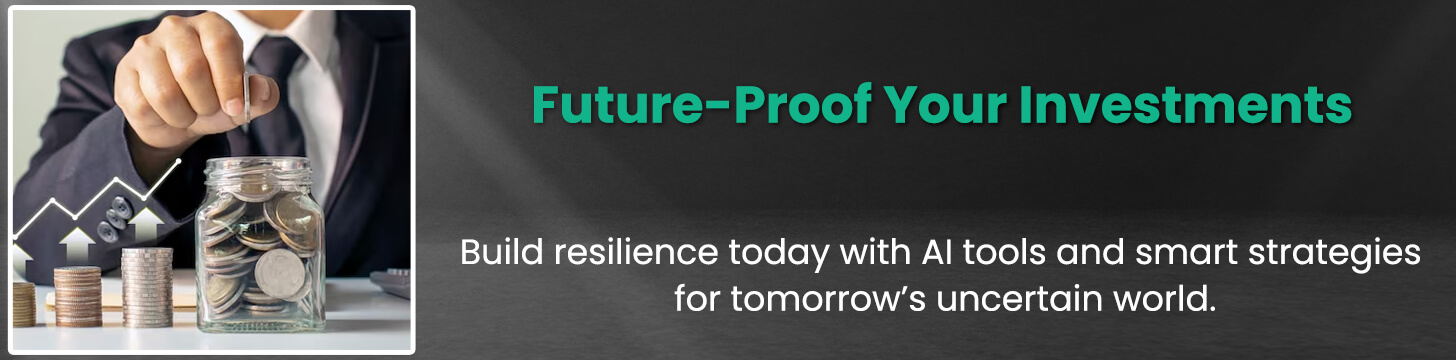
Risk management is no longer about avoiding losses – it’s about building resilience in a crazy world. By 2035, Australian investors will need AI tools, robo-advisors and long term strategies to protect their wealth from market shocks and global uncertainty.
Avoiding Beginner Mistakes
- Many Australians overexpose themselves to property or a single asset class, leaving their portfolios exposed.
- Short term speculation in shares and crypto leads to big losses when the market turns.
- Ignoring diversification magnifies risk, especially in volatile markets.
- Investors need to move from chasing “hot tips” to structured long term strategies.
Learning from past mistakes is the first step to sustainable investing.
AI & Robo-Advisors
- Robo-advisors in Australia, such as Six Park and Stockspot, already manage billions in client funds.
- These platforms use AI to recommend portfolios based on goals and risk tolerance.
- Automated rebalancing ensures portfolios stay on track with investment plans.
- Average management fees are 0.3%–0.5%, much lower than traditional financial advisors.
AI driven advice levels the playing field, giving smaller investors access to institutional quality strategies.
Long Term Planning Under Uncertainty
- Climate change and natural disasters are systemic risks to the Australian economy.
- Demographic shifts – an ageing population with 6.66 million over 65s by 2035 – will reshape healthcare and retirement needs.
- Investors need strategies that align with longer lifespans and rising retirement costs.
- Future focused tools can run scenario modelling to stress test portfolios against economic shocks.
Long term discipline means investors don’t panic sell and stay focused on their goals.
Building a Future-Ready Portfolio

A future ready portfolio is more than a collection of investments – it’s a roadmap for financial security across decades.
Between 2025 and 2035, Australians will need strategies that balance retirement savings, lifestyle goals and intergenerational wealth transfer. Technology and digital assets will also change how portfolios are built and managed.
Aligning Portfolios with 2030–2035 Goals
- Investors must start with clear goals: retirement income, property ownership or funding education for children and grandchildren.
- By 2030, the average Australian household wealth is projected to be $20 trillion, driven by property and super growth.
- Climate policy, inflation and demographics will impact asset performance.
- Long term planning means aligning investments with likely economic trends – green energy, healthcare and digital services will be the winners.
Future focused portfolios are not just about returns – it’s about resilience in changing conditions.
Retirement, Lifestyle and Intergenerational Wealth
- Retirement costs are rising: ASFA estimates a comfortable retirement requires $690,000 for couples in 2025, up from $640,000 in 2023.
- Lifestyle choices – travel, housing upgrades or flexible work – add to the need for liquidity in portfolios.
- Intergenerational wealth transfer is accelerating: Australia is entering a $3.5 trillion wealth handover by 2040 as Baby Boomers pass on assets to younger generations.
- Structuring investments through super, trusts or property ensures wealth can be passed on efficiently.
Balancing these three goals requires disciplined allocation, tax planning and diversification.
Integrating Traditional & Digital Assets
- Traditional assets like shares, property, and bonds remain essential, providing stability and income.
- Digital assets are gaining credibility: tokenised property, carbon credits, and blockchain-based ETFs are expanding rapidly.
- Regulators such as ASIC are tightening oversight of digital markets, reducing risk for investors.
- By 2035, it’s expected that 10–15% of global portfolios will include some form of digital asset.
Integrating digital tools also improves efficiency—AI-driven dashboards allow investors to monitor and rebalance in real time.
Conclusion
Australia’s future wealth depends on smart choices. From shares and ETFs to property, superannuation, startups, diversification, and risk management, seven strategies offer resilience and growth.
The next decade brings challenges and opportunities. Climate action, digital disruption, and demographic change will reshape returns. Proactive, future-ready investors will navigate uncertainty with confidence.
Now is the time to act decisively. Set clear financial goals, embrace sustainable innovation, diversify portfolios, and start shaping generational wealth for Australia’s 2030–2035 horizon.
Frequently Asked Questions
1. What are the best ways to invest money in Australia in 2025?
Australians in 2025 can build wealth through shares, ETFs, property, and superannuation.
Shares and ETFs offer growth and diversification, especially with ESG-focused options.
Property remains a solid foundation, with regional hubs and eco-communities offering strong returns.
Superannuation contributions ensure retirement stability. Combining these areas provides a future-ready balance between safety, growth, and sustainability.
2. Is it better to invest in shares or property in Australia by 2030?
Both shares and property will play critical roles. Shares and ETFs deliver liquidity, global exposure, and access to innovation.
Property offers stability, rental yield, and long-term growth, especially in regions supported by infrastructure.
By 2030, investors who blend equities with property—instead of choosing one—will enjoy stronger risk-adjusted returns and more resilience against economic volatility.
3. How do tax benefits improve investment returns in Australia?
Tax rules significantly enhance net returns.
Capital Gains Tax (CGT) discounts reward long-term asset holding.
Franking credits reduce double taxation on dividends, with over A$25 billion refunded in 2024–25.
Negative gearing remains useful for property investors.
By aligning portfolios with these incentives, Australians can increase after-tax income while reinvesting savings into growth sectors such as renewables or healthcare.
4. Can I use superannuation to invest in property?
Yes, Self-Managed Super Funds (SMSFs) allow direct investment in residential and commercial property.
This can diversify retirement savings beyond equities. However, recent reforms increased compliance requirements and proposed higher tax rates for balances over A$3 million.
Despite stricter rules, property within super remains popular, especially for those seeking long-term rental income and intergenerational wealth transfer strategies.
5. What trends will shape Australian investments in 2030–2035?
Future investment will be shaped by technology, sustainability, and demographics. AI-driven trading platforms and robo-advisors will automate portfolios.
Renewable energy and green ETFs will dominate growth sectors. Tokenised property will open real estate to younger investors.
An ageing population—projected at 6.6 million over 65s by 2035—will boost healthcare and retirement-focused investments, reshaping how Australians build wealth.

Valuable Insights On Property Development & Investment Opportunities
-

Top High Interest Short Term Investment Options for 2026
High Interest Savings Accounts for Liquid Cash Buffers Cash sleeve purpose and liquidity role High…
Read More -
Best Performing Managed Funds in Australia: Expert Tips & Strategies
Top-Performing Managed Funds in Australia: What Investors Need to Know In 2026, Australian investors are…
Read More -
Best Financial Advisor Perth: How to Choose the Right Expert for Your Goals
Financial Advisor Perth Key Criteria for Choosing the Best Adviser Choosing the best financial advisor…
Read More -
How to Make Money from Property Development in Australia: A Comprehensive Guide
High-Growth Cities Offering the Best Property Development Margins Australia’s property development landscape will be shaped…
Read More -
What Are the Best Low-Risk Investments in Australia for Beginners?
Low-Risk Investing in 2026: The Beginner Snapshot For Aussie beginners seeking low-risk investments in 2026,…
Read More


Our Project Site :


Exclusive waterfront living at the Lake Narracan Resort community.

Quick Links
The information provided is general in nature and does not constitute personal financial advice. The information has been prepared without taking into account your personal objectives, financial situation or needs. Before acting on any information on this website you should consider the appropriateness of the information having regard to your own objectives, financial situation and needs. All statements made on this website are made in good faith and we believe them to be accurate and reliable however do not guarantee its currency. You should seek legal or other professional advice before acting or relying on any of the content.
Please note that past performance may not be indicative of future results. Different types of investments involve varying degrees of risk, and there can be no assurance that the future performance of any specific investment, investment strategy, or product made reference to directly or indirectly on our website, blogs , newsletters.
Our Project Site :

Find premium land developments and new estates across Australia.
Exclusive waterfront living at the Lake Narracan Resort community.

Quick Links
The information provided on this website including blogs is general in nature and does not constitute personal financial advice. The information has been prepared without taking into account your personal objectives, financial situation or needs. Before acting on any information on this website you should consider the appropriateness of the information having regard to your own objectives, financial situation and needs. All statements made on this website are made in good faith and we believe them to be accurate and reliable however do not guarantee its currency. You should seek legal or other professional advice before acting or relying on any of the content.