
SIGA
| November 14, 2025
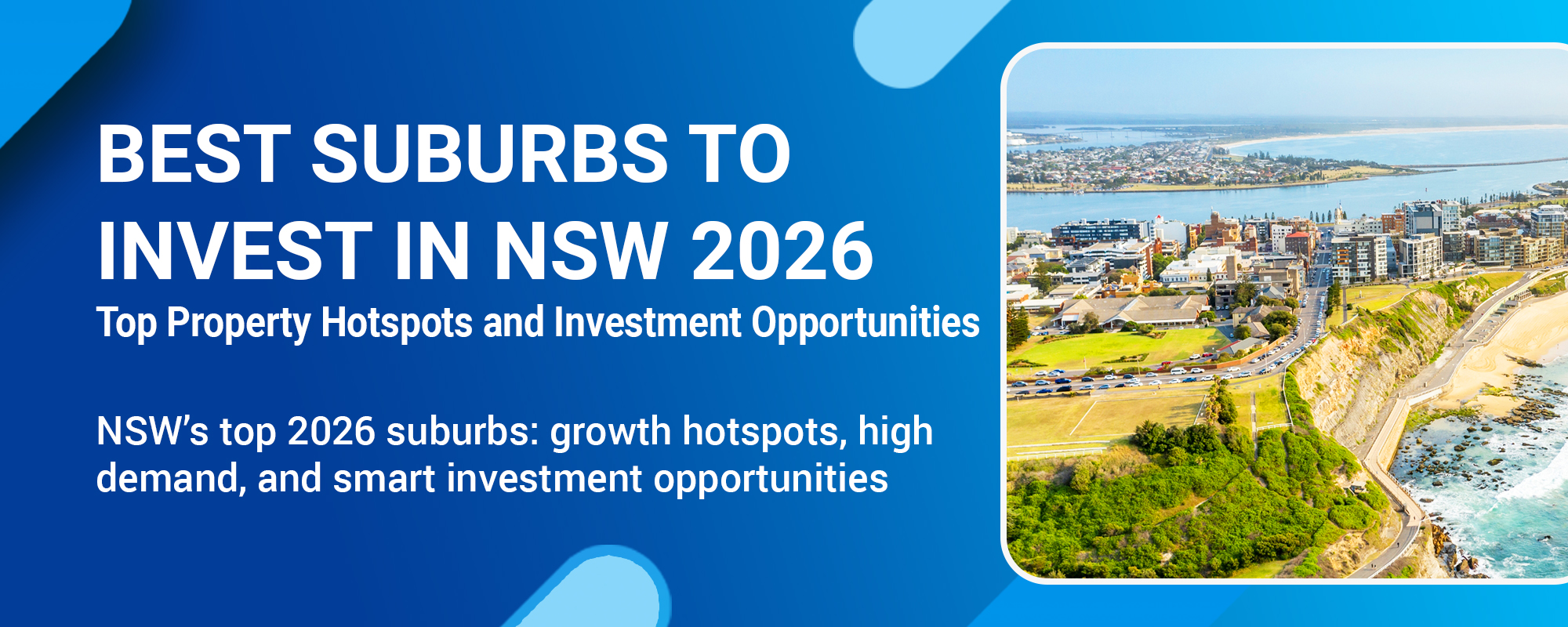
Best Suburbs to Invest in NSW 2026: Top Property Hotspots and Investment Opportunities
Table of Contents
Why NSW Remains a High-Demand State for 2026 Suburbs to Invest In
NSW is heading into 2026 with momentum, driven by rising prices, tight rentals and persistent supply constraints across Sydney and key regional areas.
NSW dwelling values rose 9.6% in 2024, as buyer confidence improved and activity picked up in the inner, middle and outer rings. By October 2025, Australian home values were up 6.1% year-on-year, with Sydney and NSW leading the national charge.
The big banks expect this to continue. Westpac is forecasting ~5% growth for Sydney in 2025, followed by an even bigger 8-9% in 2026, pushing the Sydney median house price to around $1.67 million by December 2026 – the biggest dollar increase of all capital cities.
ANZ agrees, predicting 5-6% growth in 2025-26, which is good news for investment-grade suburbs.
Population numbers are also telling. Australia’s population hit 27.54 million in March 2025, up 1.6% in a year, with 315,900 net overseas migrants.
NSW is still a top destination. While the state lost -31,678 interstate migrants, it gained +184,619 overseas migrants, so demand in Sydney and major NSW cities is still driven by international arrivals.
Federal projections show high but stabilising migration – down from 446,000 nationally in 2023-24 to around 260,000 in 2025-26, still well above long-term averages.
Rental markets are still tight. Sydney’s vacancy rate was 1.5% in April 2025, with only 10,784 vacant rentals, well below the 3% balance point.
Earlier, the mid-2024 vacancy was 1.6%, so this is a multi-year rental squeeze that’s still supporting higher yields and strong competition for investment-grade properties.
On the supply side, NSW had a 30.4% surge in dwelling approvals (seasonally adjusted) in September 2025, but completions are still well below state targets.NSW built 45,552 homes in the 12 months to December 2024, down from 47,567 the year before, and commencements fell from 46,331 to 42,397, so the state’s supply gap is widening.
Even with 172,900 new homes for Greater Sydney between now and 2028-29, annual delivery is still behind population-driven demand.
This combination of rising buyer interest, high population growth, low vacancies, and constrained supply makes the top NSW investment suburbs good for growth in 2026, especially those with limited new-build capacity, rising yields and strategic infrastructure.

Parramatta – Sydney’s Emerging Second CBD for 2026
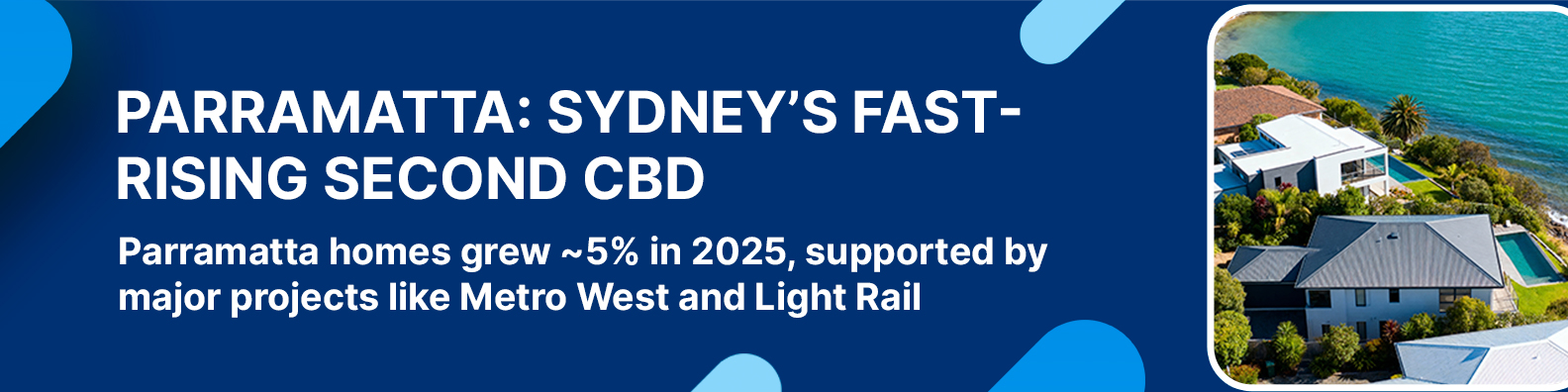
Parramatta is a dual-economy suburb, residential hub, and Sydney’s officially recognised Second CBD. This is the biggest driver of its 2026 investment strength.
Billions in infrastructure spending are transforming the suburb.
The Parramatta Light Rail, Sydney Metro West and the expansion of the health, legal and education precincts make it one of the most future-proof markets in NSW.
When a suburb becomes a second CBD, real estate demand comes from workers, students, renters and downsizers, creating a diverse tenant base.
2025 Market Signals Showing Upward Momentum
- Median house price: ~$1.3 million
- Median unit price: ~$720,000
- 1-year growth: ~5% for houses, ~4-5% for units
- Rental yields: ~3.6% (houses), ~4.9% (units)
- Vacancy rate: ~1.7-1.9%
This suburb is performing above the metro average.
With Sydney prices expected to rise 5-7% into 2026 and the citywide median pushing to $1.7-1.8 million, Parramatta is a high-demand option for buyers priced out of the Eastern Suburbs and Inner West.
Core Drivers Supporting Parramatta’s 2026 Investment Appeal:
- Government-backed CBD-strength infrastructure
- Strong job concentration in health & justice precincts
- Low vacancy indicates robust tenant demand
- Consistent unit performance for investors
- High walkability and transport connectivity
- Major retail and commercial development (Westfield, commercial towers)
Parramatta’s combination of CBD-grade employment, infrastructure density and high rentability makes it one of NSW’s most strategic investment suburbs for 2026.
Marsden Park – Airport-Driven Growth Corridor for 2026
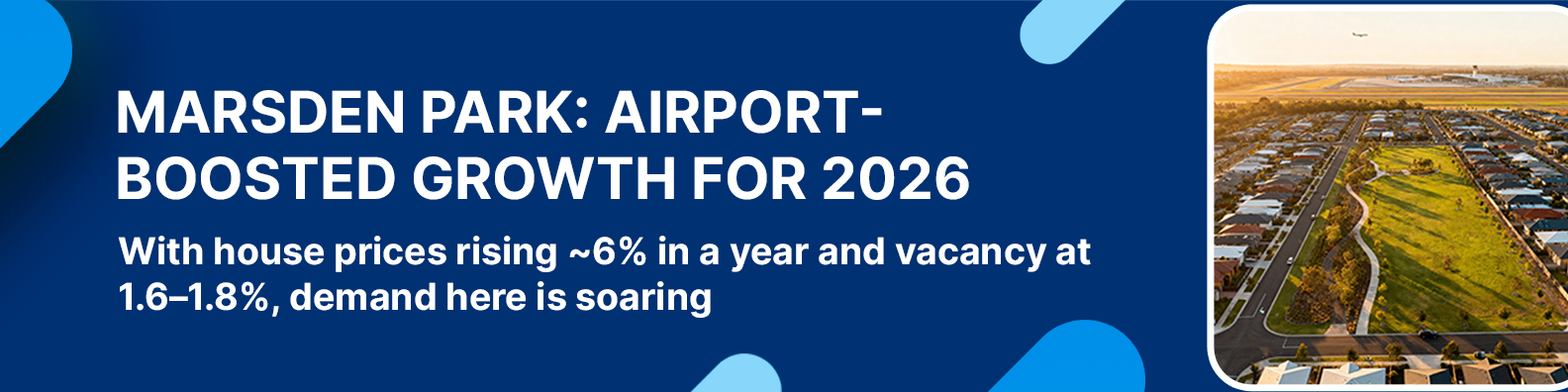
Marsden Park’s unique characteristic is its position as a “masterplanned family suburb directly influenced by the new Western Sydney Airport corridor”.
Few NSW suburbs have as many growth drivers in one region.
The suburb is in the middle of the North-West Growth Area, a region receiving billions in government and private investment.
Large land estates, new schools, emerging shopping districts and growing employment hubs make it perfect for families, first-home buyers and long-term investors.
2025 Performance Metrics Showing Expansion:
- Median house price: ~$950,000
- 1-year house price growth: ~6%
- Rental yields: ~3.8% (houses), ~4.5% (units)
- Vacancy rate: ~1.6-1.8%
This suburb has both yield and growth — a rare combination in Sydney’s high price environment.
The biggest driver for 2026 is its connection to the Western Sydney International Airport (2026).
Suburbs near major airports (e.g. Brisbane’s Northside or Melbourne’s Tullamarine corridor) have historically experienced medium-term capital growth due to job creation and improved transport links.
Investment Qualities that Have Marsden Park in Prime Position for 2026
- New infrastructure – schools, retail, road upgrades are coming in
- Affordable houses compared to the inner Sydney suburbs – a real drawcard
- With strong family demand, the rental turnover is lower
- Marsden Park is close to major job centres: Norwest, Blacktown & Parramatta
- It’s also about to benefit from the multi-decade “Aerotropolis” employment region, which is driving growth and development
- Highland availability supports future upgraders and young families looking for a place to call home
Why Marsden Park Aligns with Western Sydney’s 2026 Growth Pattern:
Outer-metro family suburbs with long-term infrastructure commitments – they’re the ones that outperform when the population starts to grow
All put together, it’s clear that Marsden Park’s combination of affordability, airport-linked economic uplift and strong rental demand makes it one of NSW’s most strategic suburbs to pick up on before 2026.
Melonba – New Western Sydney Growth Suburb for 2026

Melonba stands out as one of NSW’s new suburbs – and being the newest officially gazetted suburb in the area gives it a unique growth identity that’s driven by fresh land releases, new estates & airport-linked infrastructure.
And because it’s got this “newly created suburb status” it’s particularly attractive to investors who are looking for long-term uplift & can ride out any short term market volatility.
Melonba is located right next to Marsden Park and Schofields, and is part of the North-West Growth Area – one of the most ambitious planning zones in Australia Because it’s a new suburb carved out of a fast-growth region, Melonba is benefiting from high levels of developer activity, rapid housing construction and interest from premium masterplanned communities
The Growth Trends are Looking Good in Surrounding Corridors:
- We know that early-stage suburbs usually experience above-average growth when new infrastructure like schools & retail precincts start popping up after the first residents move in
- Buyers can snag newer homes at earlier price points, which means they can get in and ride out any peak demand that hits later on
- When population turnover is moving fast, the community starts to develop & get more amenities
Although we still don’t have suburb-specific price data for Melonba because it’s just been created, the performance of the suburb itself is mirroring that of its neighbours – Marsden Park is growing at around 6% per year, the surrounding suburbs are seeing 4-7% price rises and rental yields are averaging 3.8-4.5% – which can only be a good thing for investors, and vacancy rates are below 2% which means there’s strong competition from tenants
This is a clear sign that there’s demand for new estates in this corridor.
The Key Investment Drivers that are Helping Melonba Thrive for 2026:
- It’s in close proximity to the new Western Sydney Airport (opening 2026) which is going to be a major long-term job hub
- New schools, shopping centres & transport links are on the way, or already underway
- The area is developing family-oriented housing estates with big blocks of land
- Homes in Melonba are more affordable than the central Sydney suburbs
- This is all adding up to a big appeal for first-home buyers, young families and migrants who are looking for a place to call home and schools in this part of town
Melonba’s combination of new suburb momentum, airport-driven employment growth, and high population growth – makes it a compelling early-cycle investment opportunity heading into 2026.
Ashbury – Inner West Heritage Pocket with 2026 Upside
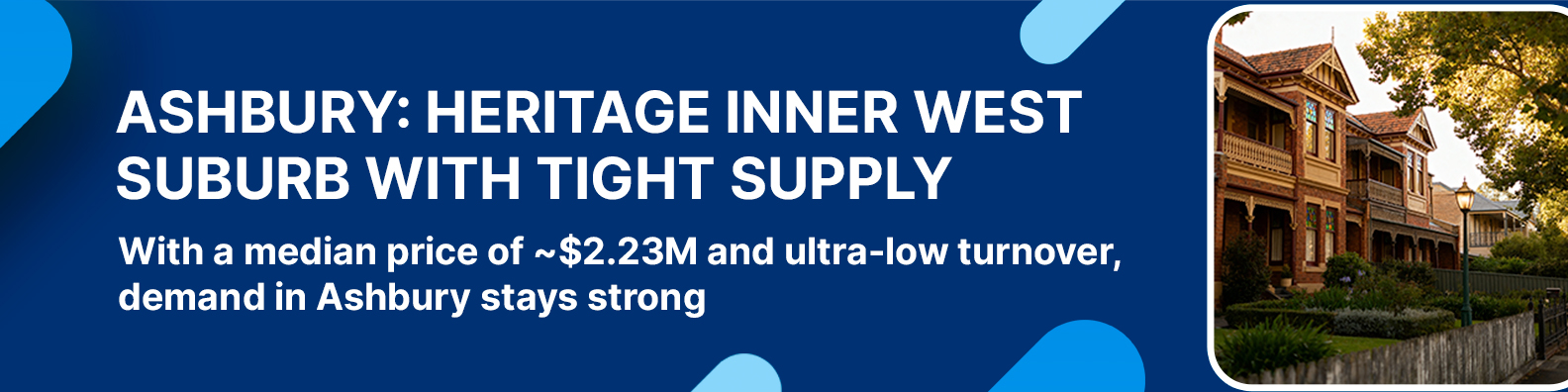
Ashbury’s unique is its status as one of Sydney’s rare “heritage garden suburbs”, a tightly held pocket within the Inner West known for Federation-style homes, wide streets and high owner-occupier pride.
This heritage identity — combined with extremely limited supply — is the reason Ashbury has been listed as one of the top suburbs to watch for 2026.
Ashbury was recently included in a national list of 10 suburbs to watch in 2026 with analysts tipping strong growth and demand.
With a median house price of ~$2.23 million, Ashbury is in the premium tier of the Inner West but more affordable than Summer Hill, Ashfield or Canterbury riverfront pockets.
What really sets Ashbury apart is its low turnover rate.
Houses don’t come onto the market often and when they do, buyer competition drives strong results.
This scarcity factor is especially important in 2026 as Inner Sydney faces supply shortages while population growth increases.
Key Features That Make Ashbury 2026 Worthy:
- High owner-occupier concentration → long term growth
- Heritage streetscapes long term demand from prestige buyers
- Close to the CBD (10–12 km) perfect for professionals
- Good schools increases family demand
- Excellent transport to Sydney CBD and Inner West hubs
- Tight vacancy and limited land release supports capital growth
Inner West agents recently commented that Ashbury attracts families who stay for decades, so price resilience is built in.
In property economics, suburbs with high emotional value, historic character and protected housing stock perform better during tightening cycles — exactly what Sydney is experiencing in 2025–2026.
Ashbury’s heritage, ultra-low supply and Inner West connectivity makes it one of NSW’s best premium markets for 2026 investors looking for long-term, stable capital growth.
Quakers Hill – High-Yield Family Suburb for 2026

Quakers Hill has a position as one of Sydney’s most high-yielding family suburbs, making it a must-have for investors looking for strong rental performance in 2026.
Its long term tenant demand and affordability compared to Schofields and The Ponds gives it a yield advantage few Sydney metro suburbs can match.
Listed in NSW’s top investment lists for 2025, Quakers Hill has strong fundamentals:
close to major employment hubs (Norwest, Blacktown, Parramatta), good schools, T1 rail line, upgraded roads and an established family demographic.
Latest Market Indicators Confirm 2026 Growth:
- Rental yields: 3.8%–4.5% depending on property type
- Vacancy rate: very tight across the region, 1–1.5%
- Median house price: more affordable than surrounding northwest suburbs
- Rental demand: high due to family focused amenities
These stats make Quakers Hill one of the few suburbs that balances affordability, rentability and long term growth.
Investment Features that make Quakers Hill a 2026 Favourite:
- Strong tenant base attracted to family friendly streets, schools and parks
- Reliable yields in a market where Sydney’s overall rental returns are low
- Easy access to major employment hubs, perfect for dual income households
- Long term demand from families reduces vacancy and turnover
- Well connected via rail and major roads
- Established infrastructure reduces risk compared to new estates
And the biggest advantage is price stability.
Unlike newer suburbs where values fluctuate based on construction pipelines or interest rate movements, Quakers Hill has a balanced market of owner occupiers and renters.
This mix delivers gradual growth not volatility.
With Sydney rents high and vacancy rates near historic lows, Quakers Hill’s combination of yield strength, family appeal and consistent demand makes it one of NSW’s most reliable investment suburbs for 2026.
Wagga Wagga – Regional NSW’s Stable High-Yield Market for 2026
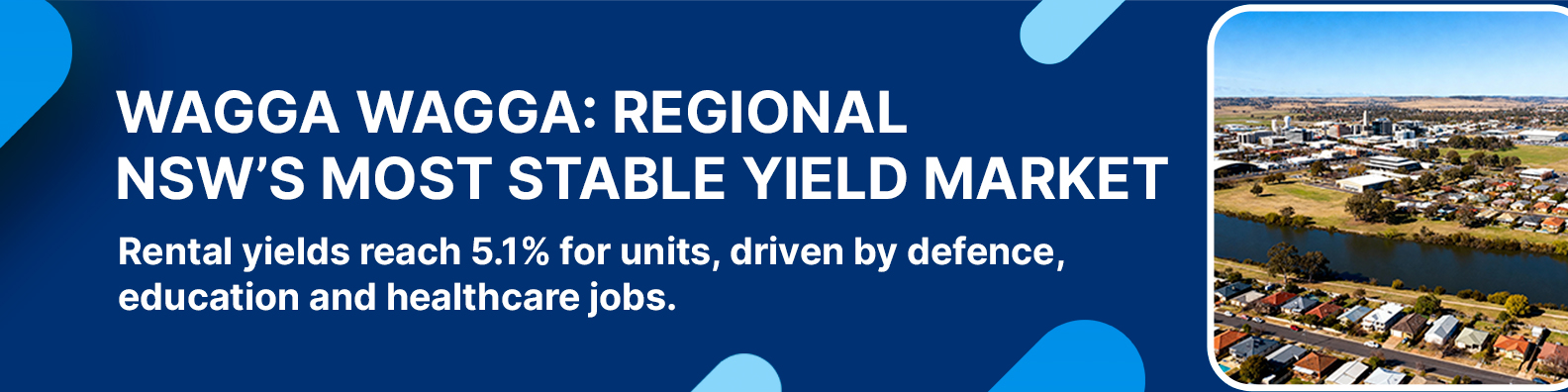
Wagga Wagga’s unique feature is Regional NSW’s most diversified inland economy supported by defence, education, agriculture, logistics and healthcare.
This economy gives Wagga Wagga something most regional towns don’t have – long term stability and resilient rental demand, making it a 2026 standout.
It’s consistently on multiple “best regional NSW suburbs to invest” lists due to its affordability, strong yields and steady capital growth.
Its diversified job market including RAAF Base, Charles Sturt University, Wagga Base Hospital and agricultural processing hubs brings a constant flow of renters such as students, healthcare workers, defence personnel and young families.
Current Economic and Property Indicators:
- Median house price: $725,000
- Median unit price: $445,000
- Rental yields: 3.8% (houses) and 5.1% (units)
- Gross yields for houses: 4.3% in the latest update
- Compound annual growth: 6.1% for houses over the past few years
Wagga Wagga is in the top regional NSW economies. Another trend is its growing popularity with downsizers and retirees.
In 2025 Wagga Wagga was one of Australia’s top retirement towns, a demographic that adds to demand for quality units and low maintenance homes.
This mix of young families, students and retirees creates a balanced demand curve.
Foundations That Will Keep Wagga Wagga’s Investment Outlook Booming in 2026:
- The fact that there’s solid demand for rentals is a big plus due to multiple employment sectors in the area
- Rental yields in Wagga Wagga are higher than most of the metropolitan suburbs
- The entry price is affordable, with a pretty attractive rent-to-value ratio
- Having a diverse economy helps protect the local market from economic shocks
- There’s going to be a significant investment in the local health and education precincts from the government
- There’s been a noticeable shift of people moving from smaller NSW towns to the regional centre in Wagga Wagga
In 2026, Wagga Wagga has got all the right factors in place – high yields, balanced demographics, and a solid economy make it one the most reliable regional investment markets in NSW for long-term growth, and that’s just not going to change.
Newcastle – Coastal Growth City with Tight Rentals in 2026
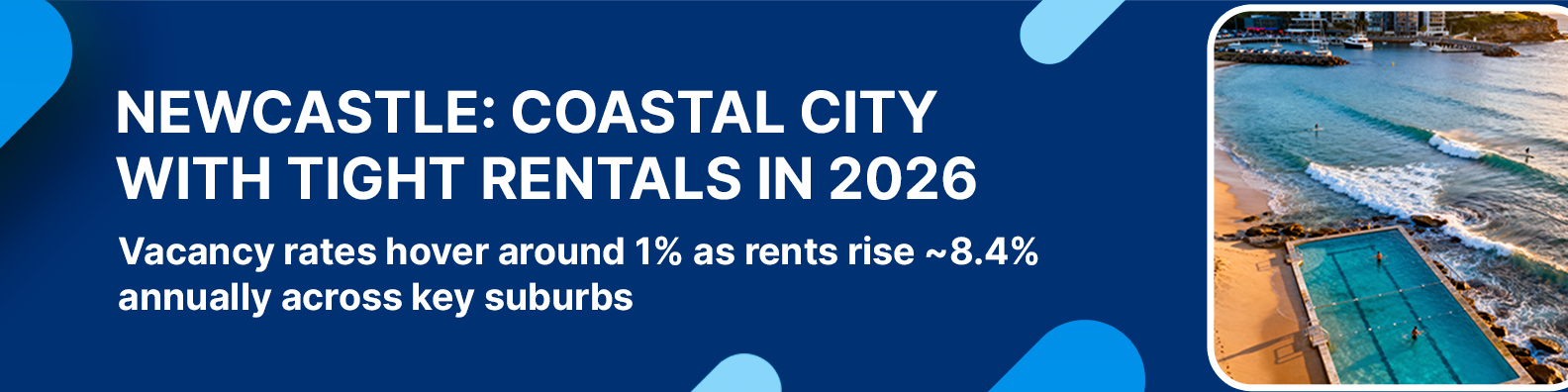
Newcastle is pretty unique in that it’s been transformed into one of the most advanced coastal secondary cities in the country, that’s just been given a major makeover. It’s a real growth engine with super tight rental competition heading into 2026.
There’s no other NSW regional coastal city that offers this combination of city centre renewal, jobs growth, lifestyle appeal and major infrastructure investment — which is why Newcastle always seems to be on the list of “strong regional markets”
Over the last decade, Newcastle has undergone a major transformation thanks to the waterfront redevelopment, new light rail, hospital expansions, university upgrades, and a booming tourism and hospitality sector.
All these initiatives have really turned Newcastle into a modern city that offers an attractive lifestyle, but still manages to keep prices relatively affordable.
The Rental Market in Newcastle is Heated, And It’s Driving Up Investment Prices:
- In many suburbs, the vacancy rate is hovering around 1%
- Unit prices in the best areas are getting close to $861,000
- The median unit rent is around $680 a week
- Over the last 5 years, the annual growth rate for house rents has averaged around 8.4%
These numbers show just how competitive the rental market is — and that’s great news for any investor looking for steady occupancy and rising rents.
The underlying factors that are driving growth in Newcastle and set to keep it going in 2026 are:
- Strong employment hubs (health, education, port logistics, tourism)
- The CBD and waterfront are getting a major makeover which is really boosting the area’s long-term appeal
- Compared to coastal Sydney suburbs, the entry price in Newcastle is actually pretty low
- The area is super walkable and they’re adding more lifestyle amenities all the time
- The population is going to keep on growing which will drive up rent levels
- The transport links are also getting a major boost thanks to new rail and highway upgrades
As affordability in coastal Sydney gets even tighter, a big wave of ex-Sydney buyers is starting to look at Newcastle as an alternative. Many are priced out of the coastal suburbs but still want a lifestyle with easy access to city amenities and beaches – and Newcastle fits the bill.
This buyer shift is going to get even bigger in 2025–2026 as the affordability squeeze intensifies.
With a coastal lifestyle, major infrastructure upgrades and tight rental conditions all combining to put pressure on the market in 2026, Newcastle’s one of the strongest investment markets in NSW.
Orange – Lifestyle Hub with Retirement-Driven Demand in 2026

Oranges claim to fame is its reputation as Australia’s 1 retirement town for 2025 – a title that accurately reflects its unbeatable mix of good healthcare options, loads of lifestyle opportunities, a more-than-reasonable price tag and long-term housing stability – all the things that retirees look for.
This retirement-driven demand puts Orange head and shoulders above the rest – and its thriving food & wine scene, medical facilities and tourism businesses only add to its appeal – making it one of New South Wales’s most balanced – and therefore attractive – regional property markets in 2026.
Orange came out top as the leading retirement destination in a national survey & the numbers don’t lie:-
- Median dwelling price: around $665,000
- Median rent: around $560 a week
- With ongoing interest from retirees, downsizers, healthcare workers and people looking to relocate to the regions – the demand is strong & continuous.
These numbers don’t just show how affordable & competitive the rental market is in Orange – they also highlight the suburb’s investment potential.
And it’s not just about the numbers – Orange also has a surprisingly diverse economy.
Healthcare, education, viticulture, agriculture, tourism and government services are all key sectors that drive the local economy.
This mix of industries is great news for anyone looking to invest in the area – it means the market is less prone to wild swings in fortunes, unlike some other towns that rely on just a
single industry.
So what makes Orange a 2026 regional leader?
- Strong demand from retirees who value good healthcare & affordable housing
- A steady rental market driven by students, seasonal workers & professionals
- A growing food & wine tourism industry that creates stable jobs
- People from Sydney are moving into the area – which is good for buyer activity
- Compared to some of the coastal towns in NSW, entry prices are relatively low
- Limited housing supply in high demand areas near the CBD & hospital precinct
One of the biggest advantages that Orange has is having a whole range of demographics to cater to.
Retirees want stability and low maintenance homes.
Professionals and families want good schools & job prospects.
Tourism workers, students and seasonal staff are always coming and going – which keeps the rental market nice & lively.
This mix of demand creates a robust & consistent rental market with minimal risk of vacancies.
Moving forward into 2026, Orange’s combination of retirement appeal , economy diversity & high rental consistency puts it firmly on the map as one of the best and safest long term regional investments in NSW.
Dubbo – Inland Growth Centre with Strong Service Demand in 2026

Dubbo is pretty special as it is Regional NSW’s most important inland transport and services hub, & this gives it a level of economic depth that is hard to find anywhere else, apart from the big coastal cities.
This unique multi-sector hub status is the foundation of Dubbo’s long-term property resilience & it is no surprise that it consistently features on NSW’s top regional investment lists.
Dubbo is home to all sorts of vital industries: health, logistics, agriculture, education, retail, aviation and tourism.
It has the Western Plains Zoo, a regional hospital upgrade, university campuses & a major transport network connecting Sydney to the western parts of NSW.
This mix of industries creates a constant demand for housing from professionals, students, families & people who are just passing through – so there are always tenants looking for a place to call home.
Recent analysis across regional NSW has found Dubbo to be a suburb to keep an eye on
because of its affordability, stable growth and balanced supply.
As Sydney house prices start to climb from 2025-2026 onwards, regional centres with medians under 1 million dollars are gaining the attention of buyers looking for some space, rental returns and a bit of a better work-life balance – and Dubbo is the clear winner in this shift.
Some Key Stats That Back Up Dubbo As a Solid Investment:
- Dubbo keeps getting ranked as one of the top places to put your money in regional NSW
- There’s strong rental demand from people working in healthcare, education and transport
- Median prices in Dubbo are much lower than in the metro areas
- There’s been a steady flow of people moving to the region who are looking to buy a home
- Rentals in Dubbo are in high demand because of workers in essential services moving to the area
Things Are Looking Good for Dubbo in 2026:
- Having a major employer presence means there’s always going to be a steady demand for rentals
- Inland transport links are attracting investment in logistics and freight
- The health precinct is expanding, which means long-term jobs are being created
- There are good education hubs in the area which support student accommodation
- Prices in Dubbo are low enough that you can get a good rent-to-value ratio with your investment
- Population growth is happening at a faster pace than new supply in key areas
So with its transport links, essential services and affordable but growing property values, Dubbo is one of the most stable and well-balanced investment markets in inland NSW heading into 2026.
Belmont North – A Lake Macquarie Coastal–Lakeside Lifestyle Pocket With Ultra-Tight Rental Demand for 2026
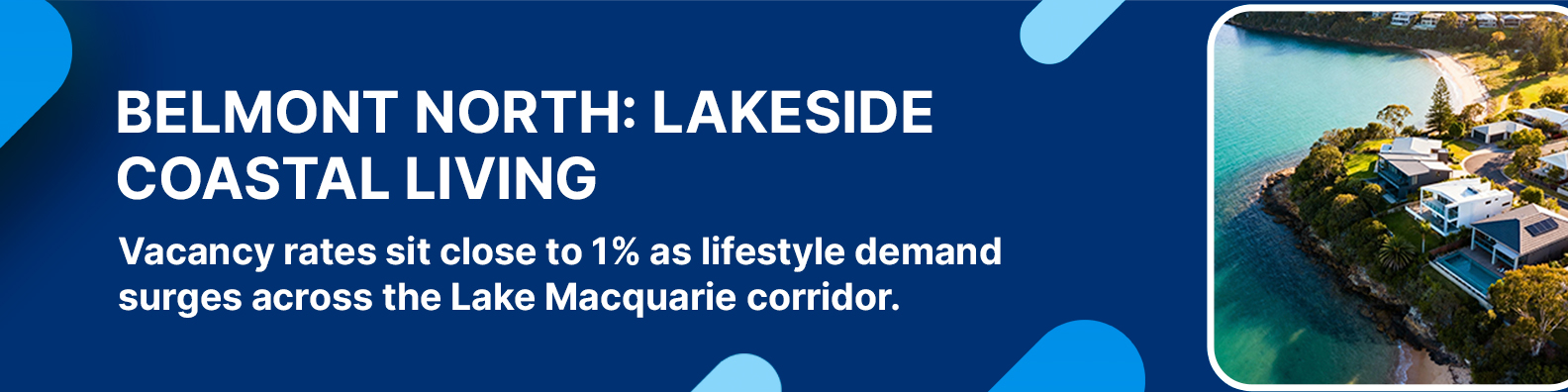
Belmont North stands out for its unique benefit of having a “dual lifestyle advantage” – offering lakefront living and surf beaches within just a few minutes’ drive.
There aren’t many regional suburbs in NSW that offer this combination, and what’s more, Belmont North makes it available at an affordable entry point.
This makes the Lake Macquarie corridor, including Belmont North, a very strong lifestyle-driven investment pocket heading into 2026.
Belmont North keeps popping up in “best investment areas” lists because of its tight vacancy rates, rising lifestyle appeal and strong rental competition and when we take a look at the vacancy reports for Lake Macquarie, we can see that multiple suburbs – including Belmont North – have got vacancy rates of almost zero.
This is a key sign of severe rental undersupply.
Newcastle’s growth is having an impact on the whole area.
As the population in the area increases and coastal suburbs become less and less affordable, demand is spilling over into Lake Macquarie where buyers can get a bit more space, better water access and a stronger chance of getting a good rent at a lower price point.
Belmont North Has Some Standout Features That Will Help It To Do Well in 2026:
- We’re seeing vacancy rates in Belmont North that are almost as low as 1% – which means tenants are turning over fast
- The combination of lakefront living, beaches and parks makes it a very desirable place to live
- There’s strong demand from families, retirees and professionals who are looking for a lifestyle change
- It’s a lot more affordable than Newcastle’s central coastal suburbs
- It’s close to major roads, employment hubs and the Newcastle CBD
- Because of the established neighbourhoods and limited land release, there’s not much new supply coming onto the market
Belmont North is also benefiting from the trend of people working from home.
Lifestyle suburbs with good outdoor amenities – like lake activities, boating and fishing – have been outperforming since 2020 and that’s not going to change anytime soon 2025-2026.
This shift is having a big impact on buyer activity and long-term rental competition.
In addition, Lake Macquarie is still seeing big improvements to its infrastructure – better transport links and new retail and medical facilities popping up all over the place are helping to make the whole region more attractive to people who are looking to set up business and make a life here.
Belmont North has got the whole “lakeside-coastal living” thing going on, which is a real drawcard.
But it’s not just about the views and the lifestyle – the rental market is super tight and there’s a lot of demand from people who are looking for somewhere to live in the long term.
This makes it one of NSW’s most interesting regional micro-markets for people looking to buy a property in 2026 and hold onto it for the long haul.
FAQs
1. What’s driving NSW’s property market to be so strong for investors in 2026?
NSW is consistently beating the rest of Australia when it comes to long-term property growth – and it’s all thanks to its growing population, its really strong economy, and the fact that there are loads of infrastructure projects on the go.
It’s expected that by 2026 the state will be adding over 120,000 new residents a year – that’s a lot of new people who are going to need somewhere to live, and it’s going to drive up demand for housing in Sydney and all the way out to the regions.
The vacancy rates in lots of key suburbs are still staying pretty low – often between 1% and 2% – which is really good news for people who are renting out properties and trying to make a profit.
And with major transport projects like Sydney Metro West, Western Sydney Airport, Parramatta Light Rail Stage 2, and upgrades to the main roads just around the corner, the value of properties near them is going to go up and up.
2. Which suburbs offer the best investment potential in NSW in 2026?
The top investment performers in NSW in 2026 will probably be a mix of coastal suburbs, suburbs that are growing really fast (like the ones near new housing estates and schools), inner-city areas with loads of amenities, and regional towns that offer a great lifestyle but are also still growing.
Places like Wollongong, Shellharbour, and Lake Macquarie are always going to be popular with people who want a bit of a sea change but still need to be within easy reach of work.
Suburbs like Marsden Park, Schofields, and Leppington are great for people who are looking to buy and then rent out their properties because there’s always a lot of demand from people who need somewhere to live.
Inner-city suburbs like Marrickville, Zetland, and Alexandria are always in high demand because they are so close to the city and have loads of shops, restaurants and other amenities on their doorstep.
And towns like Orange, Dubbo, and Wagga Wagga are great for people who want a quieter life but still need to be able to easily get to work and have access to all the things they need.
3. What kind of rental yields can investors expect in the top NSW suburbs in 2026?
It’s hard to give an exact figure, but it looks like 2026 is going to be a great year for people who are renting out properties in NSW – there are going to be some really strong returns on offer.
In Western Sydney suburbs like St Marys, Penrith, Campbelltown and Blacktown, the yields on houses are expected to be around 4.2% to 5.5%, while the yields on units will be around 5.5% to 6.8%.
If you’re looking at unit markets in the inner city, like Mascot, Wolli Creek, and Parramatta CBD, you’re probably looking at yields of 5% or more, thanks to the demand from young professionals and international students who are always looking for a place to live.
And if you’re looking to invest in a regional area – say Tamworth, Dubbo, or Albury – the yields are often even higher – between 6% and 7.5% – because there’s often less competition for properties and more demand from people who are looking for somewhere to live in a smaller, more laid-back town.
4. Are coastal lifestyle suburbs good investments for 2026?
Yes — coastal suburbs are still the strongest performers heading into 2026.
Lifestyle areas like Coffs Harbour, Port Macquarie, Shoalhaven and Central Coast attract retirees, remote workers and families looking for affordable homes outside of Sydney.
These suburbs have had 10%+ annual growth across several pockets from 2020-2024 and carry over momentum into 2026.
High demand for lifestyle living keeps vacancy rates tight, often between 1-1.5% and drives healthy rental yields.
With continuous tourism, infrastructure upgrades and growing health and education industries, coastal NSW is a long term investment play.
5. What should investors look for before choosing a NSW suburb for 2026?
Investors should look at growth fundamentals not just low prices or high yields.
Key things to consider:
- Population growth
- Infrastructure projects
- Vacancy rate trends
- Median price movement over 5-10 years
- Local employment hubs
- Rental demand and demographic shifts
Suburbs with a mix of affordability, transport, job nodes, lifestyle and new development tend to outperform.
Investors should also consider the 2026 supply, as areas with high construction pipelines may slow down.
Choosing suburbs with tight supply, strong demand, and future infrastructure will yield better long-term returns.

Valuable Insights On Property Development & Investment Opportunities
-

Top High Interest Short Term Investment Options for 2026
High Interest Savings Accounts for Liquid Cash Buffers Cash sleeve purpose and liquidity role High…
Read More -
Best Performing Managed Funds in Australia: Expert Tips & Strategies
Top-Performing Managed Funds in Australia: What Investors Need to Know In 2026, Australian investors are…
Read More -
Best Financial Advisor Perth: How to Choose the Right Expert for Your Goals
Financial Advisor Perth Key Criteria for Choosing the Best Adviser Choosing the best financial advisor…
Read More -
How to Make Money from Property Development in Australia: A Comprehensive Guide
High-Growth Cities Offering the Best Property Development Margins Australia’s property development landscape will be shaped…
Read More -
What Are the Best Low-Risk Investments in Australia for Beginners?
Low-Risk Investing in 2026: The Beginner Snapshot For Aussie beginners seeking low-risk investments in 2026,…
Read More


Our Project Site :


Exclusive waterfront living at the Lake Narracan Resort community.

Quick Links
The information provided is general in nature and does not constitute personal financial advice. The information has been prepared without taking into account your personal objectives, financial situation or needs. Before acting on any information on this website you should consider the appropriateness of the information having regard to your own objectives, financial situation and needs. All statements made on this website are made in good faith and we believe them to be accurate and reliable however do not guarantee its currency. You should seek legal or other professional advice before acting or relying on any of the content.
Please note that past performance may not be indicative of future results. Different types of investments involve varying degrees of risk, and there can be no assurance that the future performance of any specific investment, investment strategy, or product made reference to directly or indirectly on our website, blogs , newsletters.
Our Project Site :

Find premium land developments and new estates across Australia.
Exclusive waterfront living at the Lake Narracan Resort community.

Quick Links
The information provided on this website including blogs is general in nature and does not constitute personal financial advice. The information has been prepared without taking into account your personal objectives, financial situation or needs. Before acting on any information on this website you should consider the appropriateness of the information having regard to your own objectives, financial situation and needs. All statements made on this website are made in good faith and we believe them to be accurate and reliable however do not guarantee its currency. You should seek legal or other professional advice before acting or relying on any of the content.