


Table of Contents
RBA Cash Rate 3.60% — Impact on Investments for 2026
Australia’s investment landscape in 2026 presents a compelling blend of opportunity and caution.
With the Reserve Bank of Australia (RBA) cash rate currently held at 3.60%, investors are watching inflation closely, expected to ease from above 3% to around 2.6% by 2027.
This transition phase signals a shift in strategy across multiple asset classes.
Bonds and fixed income are regaining attention, with 10-year government bond yields hovering around 4.3%.
If inflation cools as projected, these instruments could deliver stronger real returns than in recent years.
The residential property market continues to rebound, showing +7.5% year-on-year growth.
However, affordability pressures and funding costs remain key variables as buyers navigate elevated price levels.
Meanwhile, Australian equities maintain long-term strength — the ASX 200 has produced an average total return of 8–9% p.a., including dividends.
This resilience underscores why equities remain the core growth engine in diversified portfolios.
On the tax-smart investing front, the superannuation concessional contributions cap remains at $30,000 for 2025–26, providing a lasting way to boost after-tax returns, regardless of short-term market fluctuations.
In this article, we explore the 10 best investment options for 2026, ranging from high-interest savings and term deposits to global equities, property assets, and super strategies, each carefully aligned with Australia’s evolving macroeconomic outlook and future growth potential.

Residential Real Estate – The Path to Long-Term Wealth in Australia
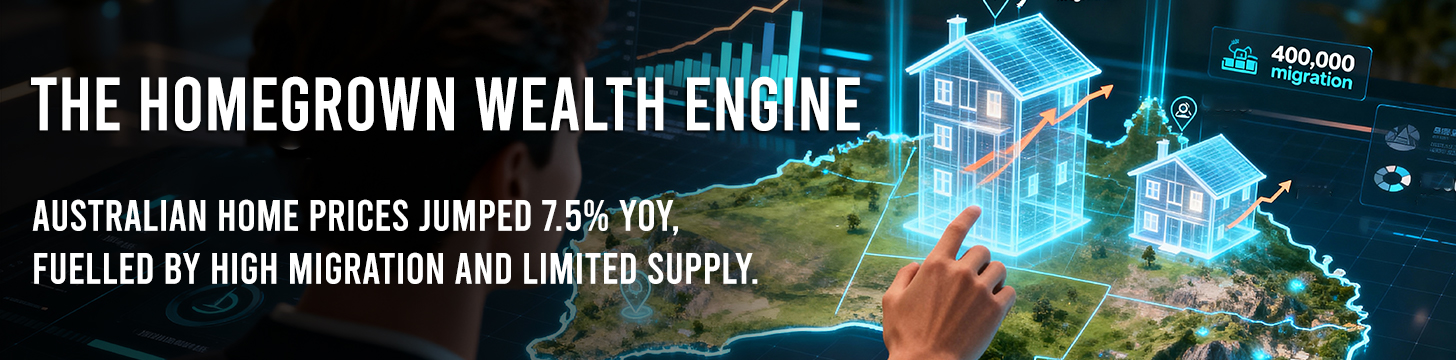
Residential real estate is a top pick for anyone looking to build wealth in Australia – especially with the next few years being kind to the market.
The country’s on the move, and so is its population.
It’s growing fast, which is great news for property investors, and the housing supply is struggling to keep pace.
That gap is just driving up prices and pushing up rental demand
Why Should Investors Care?
Right now, Australia’s big five cities – Sydney, Melbourne, Brisbane, Perth, and Adelaide – are all pretty hot property markets
That’s because of a few key factors combining to make them super competitive:
- For one, the government is expecting a big influx of new migrants (around 375 to 400 thousand every year) to arrive in Australia by 2026
- Secondly, the land near our major cities is starting to run out
- And thirdly, the whole supply chain is getting pretty congested – materials are getting more expensive, and construction is running behind schedule
- And to top it all off, rental shortages are just making things even tougher for would-be renters
These issues all combine to help property investors in the long run by delivering:
- Capital growth (property values keep on rising)
- And stable rental returns (that’s cash flow and a tidy little profit)
Quick Data Snapshot (2024 → 2025 Trends Continuing into 2026)
| Market Indicator | Current Status | Impact on Investors |
| National Vacancy Rates | Below 1.2% in most cities | Higher rent growth |
| Property Price Forecast | +4% to +7.1% per year | Wealth compounding |
| Rental Growth | +8% to +12% per year | Stronger yields |
| Interest Rates | Expected easing in 2025–2026 | Cheaper borrowing |
These figures show a solid foundation for continued growth.
Where the Best Opportunities Are
- Affordable capitals: Perth, Adelaide, Brisbane (higher yields)
- Lifestyle regions: Gold Coast, Sunshine Coast, Geelong (regional migration continues)
- Build-to-Rent suburbs: Areas near large infrastructure projects and universities
Investors are looking at:
- Dual-income properties
- Townhouses over detached homes (lower costs)
- Apartments in high-demand city zones
Final Investor Takeaway
Residential real estate in Australia is a low-volatility, tangible, long-term appreciating asset class.
Rental income is getting stronger due to housing shortages.
Government migration policy will keep demand high.
Smart investors looking to 2026 see residential real estate as a core portfolio foundation — growth and income stability.
Build-to-Rent & Co-Living: Stable Institutional Income for the Rental Future

Build-to-Rent (BTR) and co-living developments are among the fastest-growing investment categories in Australia as we head into 2026.
These are properties designed for long-term renting.
They serve tenants who want flexibility, modern amenities, and greater rental security than private landlords can offer.
Why is this booming
- Australia’s rental crisis is getting worse.
- Vacancy rates are at historic lows.
- Tenants are looking for quality rentals with guaranteed availability.
Key drivers are:
- Strong migration led to population growth
- Delayed construction completions
- Affordability is preventing home ownership
- Government incentives for BTR sector investment
Market Impact Snapshot (2024–2026 Outlook)
| Factor | Current Trend | Investor Benefit |
| BTR Projects (National) | Over 24,000 units under development | Emerging supply gap investment opportunity |
| Rental Demand | Up 15% YoY in city hubs | Higher occupancy certainty |
| Government Support | Land tax concessions & planning reforms | Better project viability |
| Tenant Preference | Growth in “renting lifestyle” cities | Strong long-term leasing |
These indicators show structural demand — not temporary growth.
Where BTR and Co-Living Thrive
Ideal zones include:
- University districts
- Major CBDs and business corridors
- Urban regeneration of suburbs
- Transport-oriented communities
Examples:
- Melbourne and Sydney have large-scale BTR construction
- Brisbane and Perth have competitive land pricing and fast approvals
- Inner-city co-living sites achieving 95%+ occupancy
Why investors are moving towards this model
Investors get:
- Institutional-grade rental income
- Lower tenant turnover (long-stay residents)
- Professional management handling operations
- Consistent cash flow even in market downturns
Unlike traditional residential investment, these assets are built with sustainability, shared amenities, and lifestyle design — attracting young professionals and long-term renters.
Final Investor Takeaway
Build-to-Rent and co-living are changing the Australian rental market.
Growing tenant demand combined with policy backing makes for a great investment opportunity.
As Australia becomes a “renter nation” by 2030, these properties offer steady returns, high occupancy, and future-proof rental income.
Tech, AI & Innovation Stocks: High-Growth Future-Ready Companies

Technology, Artificial Intelligence, and innovation-focused companies are expected to remain one of the highest growth segments of the Australian investment market into 2026.
Industries are being reshaped by automation, digital transformation, and cybersecurity needs.
Investors are increasingly shifting toward innovation as traditional sectors like mining slow in growth.
Why this sector is crucial
Businesses across all sectors are investing heavily in:
- AI automation
- Machine learning applications
- Digital payments and financial technology
- Cybersecurity protection
- Healthcare technology and biotech advancements
These trends are global and accelerating.
Tech Investment Outlook (2025–2026 Projections)
| Metric | Trend | Impact for Investors |
| AI Market Growth | Expected +35% CAGR globally | Drives revenue expansion for AI firms |
| Cybercrime Costs | Could reach USD $10.5 trillion by 2026 | Increases cybersecurity sector demand |
| MedTech & BioTech | Strong R&D funding in Australia | High innovation success potential |
| Fintech Adoption | 85%+ Australians use digital banking | Expanding user base fuels growth |
These statistics highlight a structural, not short-term, shift in business investment.
Key Tech Segments for ASX Investors
- Cybersecurity → Data privacy is legally mandatory
- Fintech → Digital wallets and payment platforms are growing rapidly
- Healthcare/MedTech → Ageing population drives medical innovation demand
- AI software → Productivity uplift for government and corporations
- Cloud services → Essential infrastructure for hybrid workplaces
Examples of Strong ASX Tech Companies (Not Financial Advice)
- Wisetech Global – Logistics software leader
- Xero – Accounting SaaS with global expansion
- CSL – World-class biotech research and production
- NextDC – Data centre infrastructure supporting cloud growth
These companies benefit from subscription revenue and global scalability.
Risk vs Reward
- Higher growth also means higher volatility.
- Tech investments require a medium to long-term view.
But the upside is still worth it:
- Rapid revenue growth
- Global market expansion potential
- Innovation-driven competitive advantages
Final Investor Takeaway
Tech and AI stocks are core “future economy” investments. Australia’s strong research environment, supportive regulation, and high digital adoption rate mean the sector will continue to grow through 2026.
Invest in these companies now and you’ll get compounding returns, especially if you hold through the ups and downs.
Government Bonds & High-Yield Term Deposits: Safe and Predictable Income

Government bonds and high-yield term deposits are the defensive assets for Australian investors in 2026.
They focus on capital protection, steady interest income, and lower volatility than shares or property.
These are for conservative investors or those nearing retirement who want stability over growth.
Why they remain relevant
In high inflation and uncertain rate cycles:
- Investors want guaranteed returns
- Risk appetite reduces — capital becomes more valuable
- Safe assets outperform speculative ones
The Australian Government has a AAA credit rating, so bonds have almost no default risk.
Market Conditions Supporting Strong Returns (2024–2026 Outlook)
| Investment Type | Current / Forecast Rate | Key Advantage |
| Government Bonds | ~3.5% – 4.5% yield | Secure and backed by the Federal Govt |
| Bank Term Deposits | 4% – 5.5% depending on the term | Guaranteed interest |
| Inflation-Linked Bonds | Indexed to CPI | Protection against inflation |
As interest rates begin to stabilise or decline in late 2025–2026, fixed-income asset pricing becomes even more favorable.
Where investors are putting their money
- Short-term deposits — enjoy current high rates
- Long-term bonds — lock in the income
- Ladder strategies — spread maturities to reduce timing risk
These are the foundations of a diversified portfolio.
Best for Investors
- Guaranteed returns — no guesswork
- Capital protection — for risk-averse profiles
- Income planning — for retirees and income seekers
- Low market correlation — defensive play during downturns
Investor Bottom Line
Government bonds and term deposits provide certainty in uncertain times.
They help stabilise your portfolio during market volatility and protect your purchasing power while the equity markets fluctuate.
As we head into 2026 with a rate environment, these fixed-income assets are the foundation for steady income and risk management.
Renewable Energy & Green Hydrogen: Sustainability with Government-Backed Returns
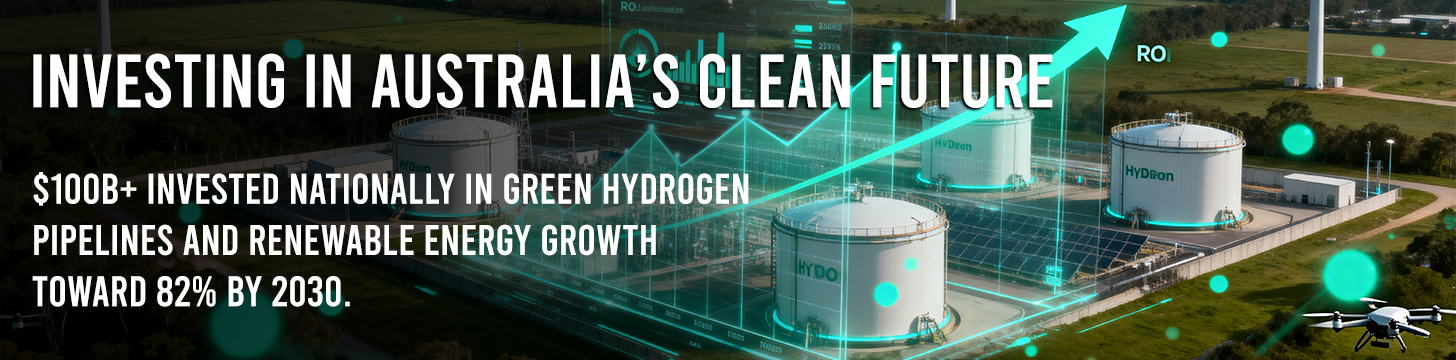
Renewable energy is becoming the growth engine of Australia as the country heads to Net-Zero 2050.
Solar and wind infrastructure and the emerging green hydrogen industry are backed by government funding and global demand.
For investors, this means sustainability, innovation, and long-term value.
Why this sector is moving
Australia is one of the sunniest and windiest places in the world.
Energy companies are shifting away from fossil fuels due to:
- Emission reduction targets
- ESG requirements from funds
- Corporate sustainability pressure
- Export demand to Asia and Europe
This creates a pipeline of investment for decades to come.
Key Growth Drivers (2024 → 2030 Outlook)
| Category | Current Status | Growth Opportunity |
| Renewable Capacity | Over one-third of all electricity | Target: 82% renewables by 2030 |
| Green Hydrogen Projects | $100B+ pipeline nationally | Export replacement for LNG & coal |
| Government Funding | Billions in incentives | Risk-reduced infrastructure returns |
| Job Creation | 100,000+ new jobs forecast | Supports regional development |
These figures show an economy-wide transformation underway.
Hot Spots
- Solar farms & rooftop deployment
- Offshore wind projects powering cities
- Battery & storage solutions ensuring grid security
- Hydrogen electrolysers and export terminals
- Green infrastructure ETFs for passive investors
Mining and transport will adopt hydrogen for decarbonisation.
ESG and Investor Benefits
Investors are now factoring in sustainability:
- Environmentally good
- Attractive long-term yield
- Aligns with global clean energy capital
- Government-backed support reduces risk
Australia is in a sweet spot for clean energy trade.
Investor Takeaway
Renewable energy and green hydrogen investments have both ethical and financial merit.
Backed by multi-billion-dollar national commitments, this sector will be at the heart of Australia’s economy through 2026 and beyond.
Investors who get in early can capture structural growth, policy-supported returns, and global demand in one portfolio.
ETFs & Global Index Funds: Low Cost Diversification With Market-Wide Exposure
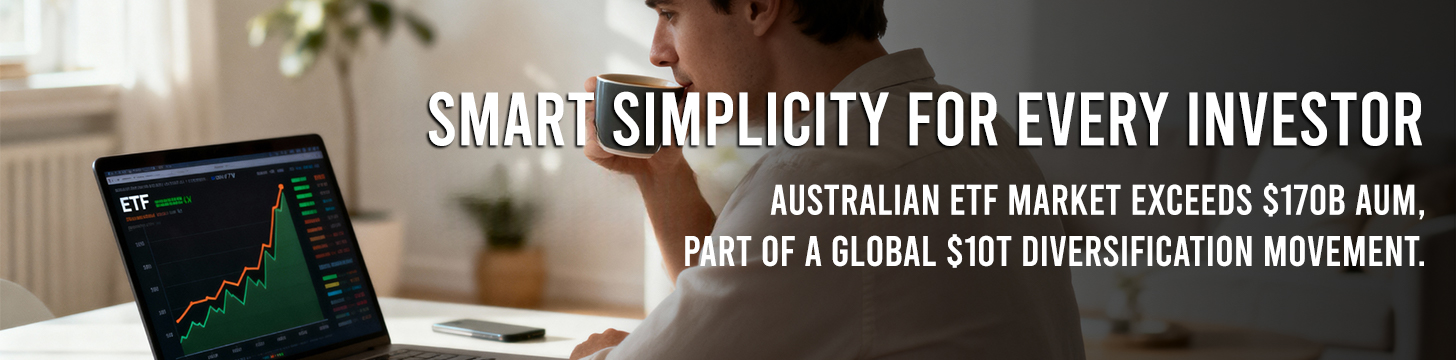
Exchange-Traded Funds (ETFs) and Index Funds are one of the smartest long term strategies for Australian investors heading into 2026.
They allow investors to get exposure to the entire market — hundreds of companies — without having to pick individual winners.
This reduces risk, lowers costs, and offers strong compounding growth.
Why Australians are choosing ETFs
Picking individual stocks can be risky and time-consuming.
ETFs solve this by providing built-in diversification.
Main benefits include:
- Broad exposure across industries and countries
- Lower management fees than active funds
- Less volatility than single stock investments
- Perfect for passive, set-and-forget strategies
This is especially good in uncertain markets.
ETF Growth Trends (Australia & Global Momentum)
| Indicator | Current Status | What It Means |
| Australian ETF Market Size | $170+ billion AUM | Growing investor confidence |
| Global ETF Market | $10+ trillion AUM | Strong worldwide adoption |
| Fees | Often 0.04% – 0.50% | Keeps more profit in the investor’s hands |
| Individual Company Risk | Greatly reduced | Market-weighted exposure |
The data shows ETFs have become a mainstream investment core.
The Best ETF Categories to Watch in 2026
- ASX200 Index ETFs – put your money into the top-performing Aussie companies
- S&P 500 & Global Tech ETFs – tap into the high growth potential of the US and global market
- Dividend ETFs – solid and reliable income stream
- Sustainable ESG ETFs – get returns that match your values
- Bond ETFs – balance out stock market ups and downs with some stability
Some popular examples of ETFs that investors often choose (you know, just for context – not financial advice):
- VAS (the Australian market in a nutshell)
- NDQ (tech exposure that’s backing the global market)
- VGS (spreading your risk across different regions)
What Sort of Investor Benefits from ETFs
- Beginners – it’s a great way to get a foot into the market without breaking a sweat
- Long-term wealth builders – perfect for retirement portfolios that won’t need to be touched for a while
- Busy professionals – passive performance that doesn’t require hours of your time
- Risk managers – diversification to protect against market downturns
The thing is, over the long term, the market tends to go up – which means you can ride the overall growth without having to take a punt on individual companies.
The Lowdown For Investors
ETFs and Index Funds – that’s a combination of simplicity, diversification, and low cost that can’t be beat for building wealth.
Given how popular they’ve become in Australia and around the world, they’re still a foundational part of investment strategy in 2026.
And if you keep putting money into ETFs, the steady compounding returns will do the rest – less stress, a balanced approach to risk and reward – it’s a winning formula.
Commercial Industrial Logistics: Getting a Strong Lease in the E-Commerce Boom
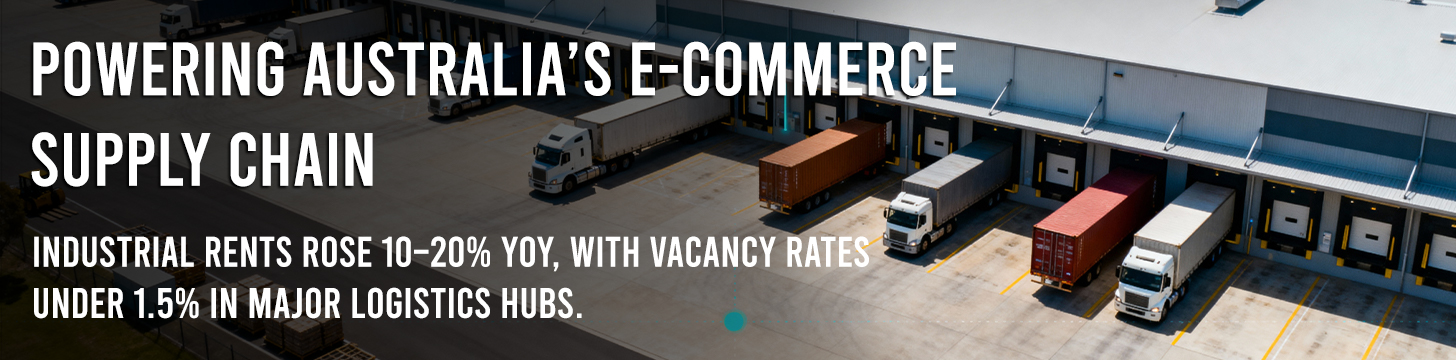
As it turns out, commercial industrial logistics properties – especially warehouses and distribution hubs – are looking like one of the standout real estate investment options adding into 2026.
Online shopping has really taken off, driven by the way people have been behaving since the pandemic, and it’s fundamentally changed supply chains.
Retailers and freight operators now need more space for storage, final delivery and automated logistics centres.
Why’s the Demand Still Growing
The Aussie logistics sector’s got a number of things going for it:
• Online shopping keeps on growing
• Big retailers like Coles, Woolworths, and Amazon are expanding their distribution networks
• There’s a global trend of supply chain reshoring
• There just isn’t much land available in major industrial areas
Industrial Property Performance Snapshot (2023–2026 Outlook)
| Metric | Current Trend | Investor Benefit |
| Rental Growth | +10% to +20% YoY in key cities | Higher yield potential |
| Vacancy Rates | Below 1.5% in major logistics hubs | Strong tenant competition |
| Lease Terms | 5–15 years standard | Predictable cash flow |
| Tenant Types | Global-grade corporations | Lower default risk |
Industrial has consistently outperformed office and retail properties.
Prime Opportunity Locations
- Western Sydney’s aerotropolis logistics region is a hotspot
- The Melbourne West industrial belt is another key area
- Brisbane and the Gold Coast’s freight corridors offer good prospects
- And Perth and Adelaide’s port-aligned estates are worth a look too
Being close to airports, highways, rail, and seaports certainly boosts the value of assets in these areas.
Investor Benefits
- Long leases are a major advantage – they lock in high income and reduce risk
- Having corporate tenants is also reassuring – it means less worry about vacancy
- You can expect strong yields from these types of investments, far better than what you’d get from residential
- And the demand for industrial space stays strong, as e-commerce continues to boom and isn’t showing any signs of slowing
With new warehouse supply under pressure due to the scarcity of land and lengthy planning process, it’s no surprise that capital values are holding up.
Final Investor Takeaway
Investing in commercial industrial logistics properties is becoming a core part of many diversified portfolios in Australia. With the online retail economy going from strength to strength and national freight growth on the rise, you can count on enduring tenant demand and premium rental growth.
As we look to 2026, well-located logistics properties look like the gold standard – strong yields, low vacancy, and long-lasting sustainability make them one of the most attractive commercial sectors on the market right now
Gold & Precious Metals – A Hedge Against Inflation

Gold and other precious metals like silver and platinum are still the go-to choice for many Aussie investors looking for a safe haven in 2026.
Their value tends to rise when economic uncertainty is high, making them a great way to hedge against inflation, currency weakness, and market volatility. Unlike stocks or bonds, gold is something solid that has held up well over thousands of years as a store of wealth.
Why this sector is still worth considering
When inflation is high or there’s a chance of global conflict, investors tend to run to safe-haven assets like gold.
Gold does well in situations like:
- Interest rates start to fluctuate
- The stock market gets a bit wild
- A major currency starts to lose value
- The risk of global conflict starts to rise
Having some gold in your portfolio can help balance things out when times get turbulent
Gold Market Performance Snapshot
| Indicator | Current Trend | Investor Advantage |
| Gold Price (5-Year Growth) | ↑ ~45% | Proven long-term capital protection |
| AUD vs USD Volatility | Ongoing fluctuations | Gold protects purchasing power |
| Central Bank Purchases | Record accumulation globally | Supports demand and price stability |
| Inflation Hedge Score | Historically strong | Preserves wealth over time |
These patterns show why institutions continue increasing gold reserves.
Ways Aussies Invest in Precious Metals
- Physical gold bars and coins – a real, tangible hold on your investment.
- Sovereign gold bonds – steady as a rock, with a solid government backing.
- Gold ETFs (for a smooth and liquid ride) – perfect for those who want a dabble in gold without the hassle.
- Gold mining company shares – get in on the action and reap the rewards of a boom in the industry.
- Silver and platinum for industrial demand growth – these precious metals are flying high as we transition to renewable energy sources.
It all adds up to a winning combination of defensive and growth-based investment options.
Why Precious Metals Should be in Your Portfolio
- Act as a safety net in times of economic downturn
- Help you hold onto your wealth when the value of your currency takes a hit.
- They don’t move in sync with the stock market – so if your stocks are struggling, gold is still going to be worth something.
- Everyone in the world knows what they are, so you can always get a fair price.
- They do fantastically well when markets get a little too big for their boots
And let’s not forget silver – it’s in high demand for solar panels and electronics, which is only going to get a whole lot bigger as we move to renewable energy.
The Final Word for Investors
Gold and precious metals are, and will remain, a reliable long-term insurance policy for any investor.
As Australia heads into a potentially uncertain future with inflation and global economic pressures, these assets are here to provide the stability and protection you need.
So why not allocate a small portion of your portfolio to precious metals? You’ll gain so much more resilience when the markets get a little wild.
Agriculture and Agritech – Essential Goods With Long-Term Global Demand
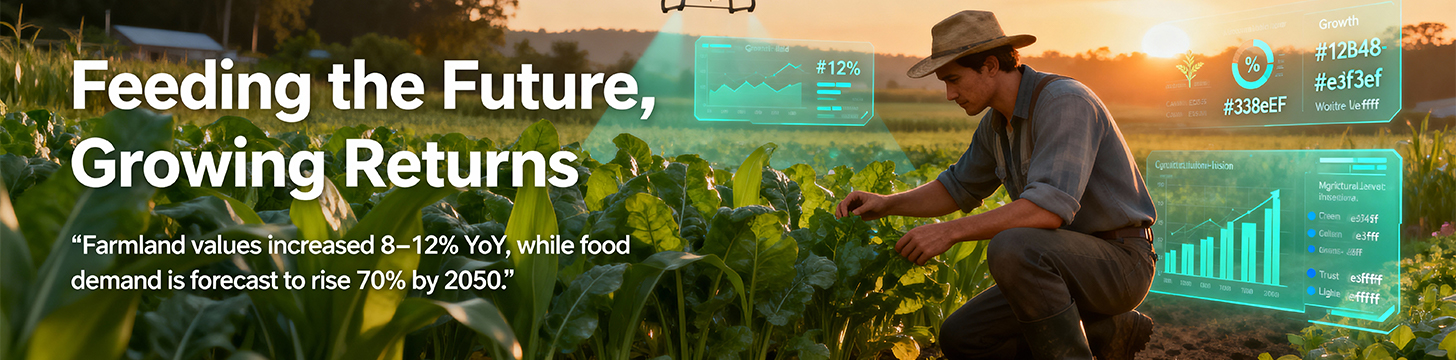
Agriculture is one of Australia’s most important sectors – and an investment category that just won’t go out of fashion in 2026.
Food is essential, regardless of how the economy is tracking.
And as the global population keeps on growing and everyone wants to make sure they have food on the table, agricultural land and tech supporting food systems are really starting to gain some serious traction.
Agritech innovation – like automation, climate-resilient farming, and precision irrigation – is turning what was once a pretty basic sector into one that’s really leading the way.
Why the Demand Just Keeps on Growing
Australia is a major player when it comes to exporting high-quality agricultural products, including:
- Wheat – it’s a staple that’s always in demand
- Beef and livestock – we produce some of the best meat in the world
- Dairy – from milk to cheese to butter, we’re a global leader
- Cotton – our farmers grow some of the best in the world
- Wine and horticulture – from fine wines to fresh fruit and veggies, we’ve got it all.
The global appetite for these products is growing faster than our ability to supply them.
Key Performance Indicators for Investors (2024–2030 Outlook)
| Metric | Trend | Investor Benefit |
| Farmland Values | Consistent +8% to +12% YoY | Strong capital growth |
| Food Demand | Forecast to rise 70% by 2050 | Long-term export opportunities |
| Water Rights Value | Increasing due to scarcity | Critical and appreciating asset class |
| Agritech Adoption | Rapid acceleration | Productivity + cost savings |
These numbers show a structural growth cycle, not speculative hype.
Best Investments in Australia
- Farmland with leasing income
- Water rights in high-value irrigation areas
- Grain storage and logistics
- Vertical farming and greenhouses
- Robotics, drones, and sensors to improve farm efficiency
- Livestock management and biotech feed solutions
Government incentives support regional investment to keep food production in Australia.
Investor Benefits
- Recession-proof — people will always eat
- Strong export income as Asia grows
- ESG investment with environmental benefits
- Historically low volatility vs equities
- Passive income + equity growth
Australia’s biosecurity keeps export credibility and pricing power.
Investor Summary
Agriculture and agritech investments offer a rare combination of stability, demand, and growth.
As food security becomes more critical and resources get scarcer, this is a future-proof asset for Australian investors.
Going into 2026, it’s a steady performer with income and long-term growth — so a good addition to any portfolio.
Cryptocurrency & Blockchain Assets: High Growth High Risk

Cryptocurrency and blockchain investments are one of the highest growth yet highest risk asset classes for Australian investors looking at 2026.
Blockchain goes far beyond digital currencies — supporting financial transfers, smart contracts, asset tokenisation, gaming, cyber-security, and Web3 infrastructure.
Investors who get in early can achieve big returns as adoption grows.
Why investors are still interested
Digital assets benefit when:
- New tech goes mainstream
- Financial systems go digital
- Younger generations demand decentralised services
- Institutional investors put capital into blockchain
Australia is also developing regulations to make crypto investing safer and more structured.
Crypto & Blockchain Growth Snapshot (2024–2026 Outlook)
| Factor | Current Trend | Investor Upside |
| Global Crypto Market Cap | Recovered to >$2 trillion | Strong rebound momentum |
| Institutional Involvement | Rapid ETF approvals + custody services | Higher credibility |
| Blockchain Adoption | Expanding in banking, gaming & logistics | Real-world utility growth |
| Australian Participation | 30%+ Gen-Z hold crypto | Strong investor demand |
These signals show expanding real-use cases rather than short-term hype.
Investment Options in Australia – What to Know
- Major coins like Bitcoin and Ethereum – they have high liquidity, you know?
- Layer-2 scaling and smart-contract platforms – think of them as the tech beneath the surface
- Web3 gaming and Metaverse tokens – where the gaming world is heading
- Stablecoins for earning a steady income
- Blockchain ETFs (tried-and-tested exposure to regulated markets)
- Tokenised assets and DeFi – the wild west of finance
These investment options cover both the safe-haven of value and the rapidly evolving world of innovation.
The Risks Involved
But here’s the thing: crypto is super volatile – so it needs to be a tiny part of your overall portfolio.
Now, those who were in the game early on have historically seen some pretty wild swings in value – but also some extreme upside during the good times.
And let’s be real, the adoption of blockchain has been lightning-fast compared to traditional finance, and the innovation coming out of this space is creating a ton of value.
We’re expecting regulation to bring more protections for consumers and get institutions on board big time by 2026.
The Takeaway for Investors
So what does it all mean? Cryptocurrency and blockchain are some seriously transformational technologies that are changing the face of finance as we know it.
Sure, volatility is a big deal, but if you do your research and are willing to take on some risk, there’s a real opportunity here for long-term growth.
As we head into 2026, this sector is offering a chance to ride the wave of digital evolution as global economies modernise.
Frequently Asked Questions
What are the top investment options in Australia for 2026?
Australia’s got a pretty sweet range of high-performers that are likely to keep delivering in 2026.
Some of the top ones include:
- Real estate – because people need places to live
- Bonds – for a bit of guaranteed income
- High-growth stocks – where the action is
- ETFs and index funds – for diversification and lower fees
- Cryptocurrencies and blockchain assets – for taking a bite out of the future
- Gold and precious metals – classic safe-haven plays
- Self-managed super funds (SMSFs) – to maximise your retirement savings
- Term deposits and high-interest savings – for a low-risk return
- Agriculture and farmland – because people need to eat
- Emerging industries like EVs and AI – the next big thing
These investments are all the more interesting because of Australia’s growing population, stable economy, and increasing demand for tech and housing.
Why is real estate such a strong investment in 2026?
Real estate has a long history of being a solid wealth creator.
Key reasons include:
- Our population is growing, and that means housing demand is high
- Land is pretty scarce in the major cities
- Rental income is looking solid due to low vacancy rates
- Property prices historically go up over time, so it’s a pretty safe bet
Even when interest rates are all over the place, well-located homes and investment properties tend to stay resilient – offering both capital growth and rental returns.
Are stocks and ETFs good investment choices in 2026?
Yeah, especially in industries with a strong future – like renewable energy, healthcare, and tech.
ETFs are also a good option because they’re cheaper, offer diversification, and reduce your risk by spreading your exposure across multiple companies.
As markets recover and digital adoption accelerates, these assets are likely to grow steadily.
Is cryptocurrency a good investment option in 2026?
Cryptocurrency can be a bit of a gamble – but the high stakes might just pay off for some people.
People are drawn to it because:
- Digital payments and blockchain are becoming more widely accepted and used
- There’s a good argument to be made that digital assets will keep growing over the long term
On the flip side, though:
- Prices can shift overnight
- Only invest as much as you’re comfortable with possibly losing.
Spreading your money across established big hitters like Bitcoin and Ethereum might help reduce the risk, compared to newer coins that don’t have the same track record.
What are the most stable investments in Australia in 2026?
There are investments out there that are more about playing it safe than trying to make a quick profit.
For people who want some stability and predictability in their returns, try these low-risk options:
- Government and corporate bonds
- Term deposits – a good old-fashioned savings option
- High-interest savings accounts – where your money just earns a little bit on the side
- Blue-chip dividend stocks -or blue-chip stocks, for short – tend to have steady returns, even when the market is up and down.

Valuable Insights On Property Development & Investment Opportunities
-

Top High Interest Short Term Investment Options for 2026
High Interest Savings Accounts for Liquid Cash Buffers Cash sleeve purpose and liquidity role High…
Read More -
Best Performing Managed Funds in Australia: Expert Tips & Strategies
Top-Performing Managed Funds in Australia: What Investors Need to Know In 2026, Australian investors are…
Read More -
Best Financial Advisor Perth: How to Choose the Right Expert for Your Goals
Financial Advisor Perth Key Criteria for Choosing the Best Adviser Choosing the best financial advisor…
Read More -
How to Make Money from Property Development in Australia: A Comprehensive Guide
High-Growth Cities Offering the Best Property Development Margins Australia’s property development landscape will be shaped…
Read More -
What Are the Best Low-Risk Investments in Australia for Beginners?
Low-Risk Investing in 2026: The Beginner Snapshot For Aussie beginners seeking low-risk investments in 2026,…
Read More


Our Project Site :


Exclusive waterfront living at the Lake Narracan Resort community.

Quick Links
The information provided is general in nature and does not constitute personal financial advice. The information has been prepared without taking into account your personal objectives, financial situation or needs. Before acting on any information on this website you should consider the appropriateness of the information having regard to your own objectives, financial situation and needs. All statements made on this website are made in good faith and we believe them to be accurate and reliable however do not guarantee its currency. You should seek legal or other professional advice before acting or relying on any of the content.
Please note that past performance may not be indicative of future results. Different types of investments involve varying degrees of risk, and there can be no assurance that the future performance of any specific investment, investment strategy, or product made reference to directly or indirectly on our website, blogs , newsletters.
Our Project Site :

Find premium land developments and new estates across Australia.
Exclusive waterfront living at the Lake Narracan Resort community.

Quick Links
The information provided on this website including blogs is general in nature and does not constitute personal financial advice. The information has been prepared without taking into account your personal objectives, financial situation or needs. Before acting on any information on this website you should consider the appropriateness of the information having regard to your own objectives, financial situation and needs. All statements made on this website are made in good faith and we believe them to be accurate and reliable however do not guarantee its currency. You should seek legal or other professional advice before acting or relying on any of the content.